
For most healthy adults, natural remedies for sinusitis come down to a small, unglamorous list that actually works: rinse the nose with salt water, drink enough fluids, apply warmth to the face, and rest. Some flashier ideas — juice-only fasts, sniffing herbal powders up the nose, megadosing vitamin C every two hours — are not backed by good evidence, and a few can do real harm.
Sinusitis (also called rhinosinusitis) is inflammation of the sinuses — the air-filled spaces in the bones around your nose, cheeks, and forehead. Most acute cases in adults are caused by a virus and clear up without antibiotics [CDC, 2024]. That means home care does most of the heavy lifting. The sections below cover what the evidence actually supports, what to skip, and the warning signs that mean it is time to call a clinician instead of waiting it out.
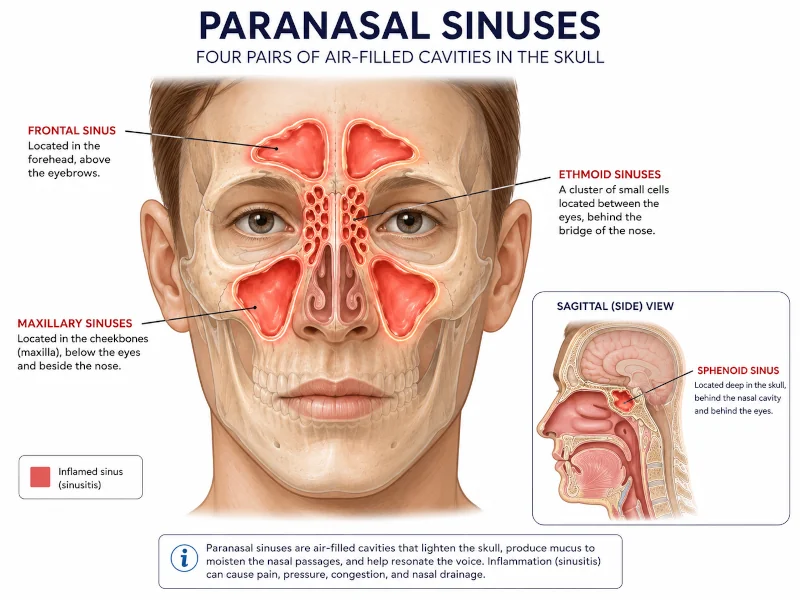
What sinusitis actually is
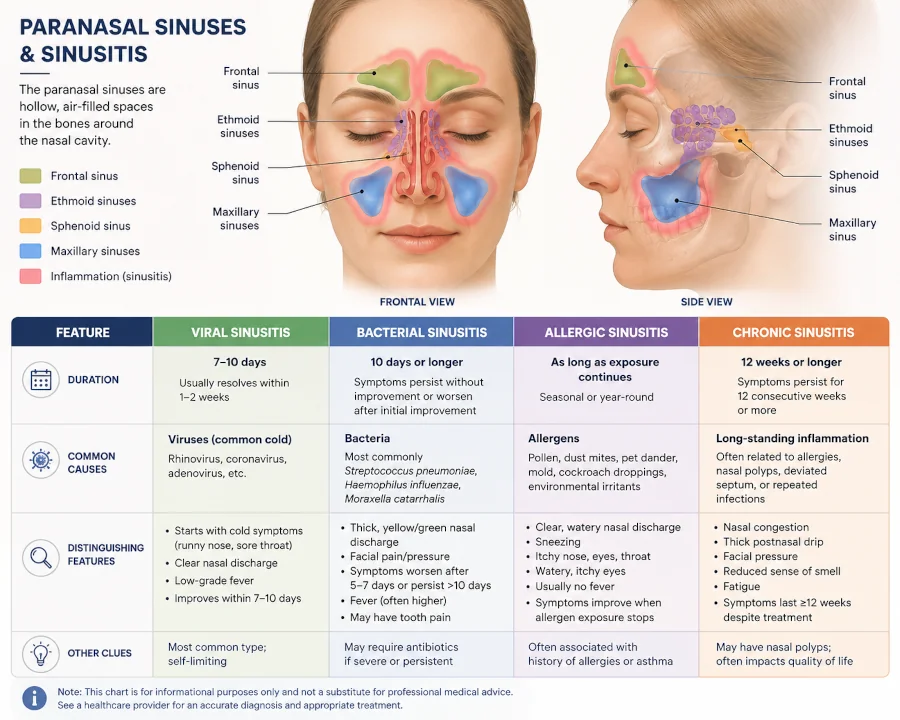
Doctors usually split sinusitis into two buckets based on how long symptoms last [AAFP, 2025]. Acute rhinosinusitis lasts less than four weeks and most often follows a common cold. Chronic rhinosinusitis lasts twelve weeks or longer and is more often driven by ongoing inflammation, allergies, nasal polyps, or structural issues [AAFP, 2023].
The cause matters because it changes what helps. Viral sinusitis — by far the most common type — needs supportive care while your body clears the infection. Bacterial sinusitis is much less common and is the only kind that may benefit from antibiotics, which a clinician decides.
Allergic sinusitis is driven by triggers like pollen, dust mites, mold, or pet dander, and is better managed by reducing exposure and treating the underlying allergy than by herbal teas. The nose, sinuses, ears, and throat all share the same lining, which is why a sinus problem often shows up with a sore throat or ear pressure at the same time.
Symptoms — and the red flags that change the plan
Typical symptoms of acute sinusitis, per the CDC, include [CDC, 2024]:
- Stuffy nose and runny nose
- Facial pain or pressure (forehead, cheeks, between or behind the eyes)
- Headache
- Mucus dripping down the back of the throat (post-nasal drip)
- Sore throat or cough
- Bad breath
- Reduced sense of smell or taste
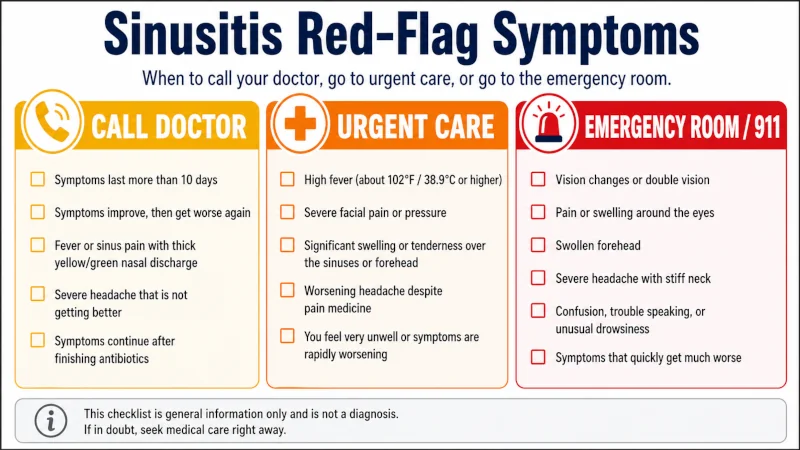
A few signs should not be managed at home. Get medical attention promptly if you have any of the following:
- Severe headache or facial pain that is sudden or worsening
- Swelling, redness, or pain around the eye, changes in vision, or difficulty moving the eye
- Stiff neck, confusion, or sensitivity to light
- Fever above 102°F (39°C) lasting more than three to four days
- Symptoms that improve, then suddenly worsen — the so-called “double-sickening” pattern that suggests bacterial infection
- Symptoms lasting more than 10 days without any improvement
These overlap with rare but serious complications such as orbital cellulitis, meningitis, and abscess [AAFP, 2025]. They are uncommon, but not worth gambling on.
Natural remedies for sinusitis with the strongest evidence
1. Saline nasal irrigation
Rinsing the nasal passages with salt water is the single home remedy with the most consistent research behind it. A 2016 Cochrane review of saline irrigation in chronic rhinosinusitis concluded that daily, large-volume (about 150 mL) hypertonic saline irrigation provides modest symptom benefit compared with placebo, though the quality of evidence was low [Chong et al., Cochrane, 2016].
The 2025 update of the American Academy of Otolaryngology–Head and Neck Surgery (AAO-HNS) adult sinusitis guideline lists saline irrigation among the supportive options clinicians may recommend for both viral and bacterial rhinosinusitis [AAO-HNS, 2025]. A pragmatic UK trial of more than 600 primary-care patients found that advice to use daily nasal irrigation produced a clinically meaningful improvement in chronic or recurrent sinus symptoms at six months compared with usual care [Little et al., CMAJ, 2016].
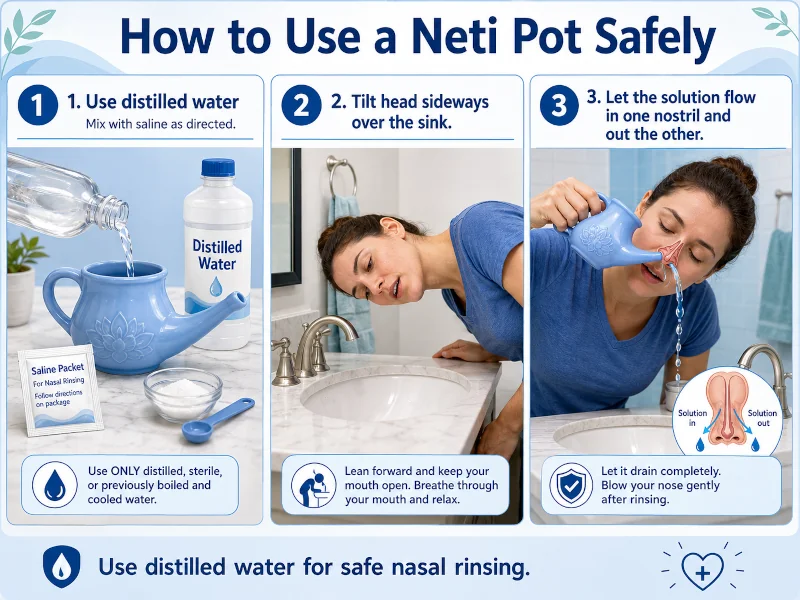
How to do it safely. Use a neti pot, squeeze bottle, or bulb syringe with a pre-mixed saline packet (or a homemade mix of about ¼ teaspoon of non-iodized salt and a pinch of baking soda per 8 ounces / 240 mL of water). Tilt your head to one side over the sink and let the solution flow in one nostril and out the other. Repeat on the other side.
The water matters. The FDA warns that plain tap water is not safe for nasal rinsing. Tap water can contain low levels of organisms — including amoebas — that the stomach destroys but the nasal passages do not, and in rare cases this has caused fatal brain infections [FDA, 2024]. Use one of:
- Distilled or sterile water from a bottle
- Boiled water — boil for 3 to 5 minutes, then cool until lukewarm
- Filtered water passed through a filter labeled “NSF 53” or “NSF 58” (1-micron absolute or smaller)
Wash the device after each use and let it air-dry. Do not share it.
2. Warm compresses to the face
A warm, moist washcloth pressed gently against the cheeks and forehead for 5 to 10 minutes can ease the dull pressure of sinus pain. The CDC includes warm compresses, saline sprays, and breathing in steam among its main self-care recommendations for sinus infection [CDC, 2024]. This is low-cost, low-risk, and unlikely to interfere with any other treatment. Be careful with very hot water around children and anyone with reduced skin sensation.
3. Steam inhalation — modest, mostly for comfort
Breathing warm, moist air from a hot shower or a bowl of just-boiled water (covered head, eyes closed, face about 12 inches above the bowl) is a centuries-old self-care move. Be honest about what it does and does not do: the same UK primary-care trial that found benefit from saline irrigation found that advice to use steam inhalation reduced headache but did not significantly improve other sinus symptoms [Little et al., CMAJ, 2016]. Steam will not shorten an infection. It may make you feel a little better in the moment. Scalding injuries from spilled water are a real risk, so this is not appropriate for young children.
4. Hydration, rest, and pain control
Drinking enough fluids helps keep nasal mucus thinner and easier to clear. There is no “magic” beverage for this — water, broth, and herbal teas are all fine. Acetaminophen or ibuprofen can ease facial pain and reduce fever in adults; follow the dosing on the label and check with a clinician if you have liver disease, kidney disease, ulcers, or take blood thinners. Adequate sleep — yes, the unglamorous kind — supports the immune response that is doing the actual work of clearing a viral infection.
5. Bromelain (the pineapple enzyme) — promising but limited
Bromelain is a mix of enzymes found in pineapple stems and fruit that has been studied for swelling and post-surgical recovery. A 2006 systematic review identified three randomized trials in sinusitis (including one in 116 children), all of which reported some benefit, with mild side effects rare [Guo et al., 2006]. A 2023 systematic review and meta-analysis concluded that bromelain may be effective for sinusitis but emphasized the limited number and size of trials [Leelakanok et al., 2023]. The U.S. National Center for Complementary and Integrative Health (NCCIH) acknowledges that a small number of studies support bromelain for reducing sinusitis symptoms [NCCIH, 2024].
Eating fresh pineapple is unlikely to deliver a therapeutic dose; supplements are concentrated. Skip bromelain if you are allergic to pineapple, are taking blood thinners (it may increase bleeding risk), are about to have surgery, or are pregnant or breastfeeding. Talk to a pharmacist or clinician before starting.
Remedies with weaker or mixed evidence
Eucalyptus, peppermint, and menthol vapors
Inhaling vapor with a few drops of eucalyptus or peppermint essential oil added to hot water is a popular home approach. The main active compound in eucalyptus oil, 1,8-cineole (eucalyptol), has been studied for cold and sinus symptoms with some positive results, but trial sizes are small and quality is variable. Menthol can create the sensation of clearer breathing without actually opening the nasal passages much. Both oils can irritate skin and mucous membranes and should never be applied undiluted to the face, swallowed, or given to infants or young children. Animal studies have linked menthol exposure in infants to breathing problems.
N-acetylcysteine (NAC)
NAC is a derivative of the amino acid cysteine that can thin mucus. It is sometimes recommended for chronic rhinosinusitis, but high-quality trial evidence is limited and clinical guidelines do not list it as a first-line supportive treatment. If you are interested, treat it as a discussion with your clinician — not a self-prescribed fix.
Herbal combination products
Multi-herb combination products (for example, the European preparation Sinupret, which combines gentian root, primrose flower, sorrel, elder flower, and verbena) have been studied as add-ons for sinusitis. Some trials report modest symptom improvement, but the evidence base is uneven and most studies were funded by manufacturers [Guo et al., 2006]. If you try one, look for products tested by an independent third party such as USP, NSF, or ConsumerLab.
Honey for cough
If a nagging cough is part of your sinus picture, a teaspoon of honey can help ease nighttime cough in adults and children over 12 months. Never give honey to a child under 1 year because of the risk of infant botulism.
Lifestyle and environmental measures that quietly help
- Run a clean humidifier in dry indoor air, aiming for 40–50% relative humidity. Empty and clean it daily to avoid mold growth.
- Avoid cigarette smoke and vaping aerosols — both are direct irritants to the sinus lining and are strongly linked to chronic rhinosinusitis [CDC, 2024].
- Manage known allergies. If pollen, dust mites, mold, or pet dander reliably set off your symptoms, reducing exposure usually does more than any tea. See our guide to preventing allergy flare-ups for practical steps.
- Sleep with your head slightly elevated — even a single extra pillow — to help drainage overnight.
- Wash your hands often during cold and flu season. Most sinusitis starts as a viral upper respiratory infection.
- Watch for overlap with other respiratory issues. If you tend to develop chest symptoms after sinus flare-ups, our guide to foods that support recovery from bronchitis may be useful.
What to skip — or be cautious about
Some long-circulating folk remedies do not hold up to scrutiny, and a few can make things worse.
- Tap water in any nasal rinse device. As noted above, use only distilled, boiled-and-cooled, or properly filtered water.
- Over-the-counter decongestant nasal sprays (oxymetazoline, phenylephrine) for more than 3 days. Used longer, they cause rhinitis medicamentosa — a rebound congestion that keeps you trapped on the spray.
- Sniffing herbal powders (goldenseal, mullein, bayberry bark) up the nose. There is no quality evidence this helps sinusitis, and it can irritate the lining or cause unpredictable absorption.
- Calling echinacea or goldenseal “natural antibiotics.” They are not antibiotics. They may have mild immune-modulating effects in some preparations, but they do not kill bacteria the way an antibiotic does, and using them as a substitute for medical care during a serious infection can delay treatment.
- Megadosing vitamin C every two hours. This causes diarrhea, cramping, and — at very high oral doses — kidney stones in susceptible people. There is no good evidence it shortens a sinus infection.
- Juice-only “cleanses” or fasting. Sinusitis is not a toxin-overload problem. Restrictive juice fasts can drop blood sugar, leave you dehydrated despite the volume, and are inappropriate for anyone with diabetes, an eating disorder history, or who is pregnant.
- Activated charcoal for sinus symptoms. Charcoal binds substances in the gut. It does not “draw toxins” out of the sinuses and can interfere with absorption of medications taken around the same time.
Who should be especially cautious
A remedy being labeled “natural” does not mean it is safe for everyone. Talk with a clinician or pharmacist before trying herbal products or supplements if you are in any of these groups:
- Pregnant or breastfeeding. Many herbs (including high-dose bromelain, goldenseal, and some essential oils) lack pregnancy safety data.
- Children under 12, especially infants and toddlers. Steam, menthol products, honey (under age 1), and many herbal preparations have age restrictions.
- Anyone on blood thinners, antiplatelet medications, or about to have surgery. Bromelain, garlic supplements, and ginkgo may increase bleeding risk.
- Immunocompromised individuals — people on chemotherapy, organ-transplant recipients, those with poorly controlled HIV, or anyone on long-term corticosteroids. Infections can escalate fast; do not wait.
- People with asthma or COPD. Strong vapors and certain essential oils can trigger bronchospasm.
- Those with diabetes, kidney disease, or liver disease, because some herbal products and high-dose vitamins can affect blood sugar, kidney function, or drug metabolism.
When to stop self-treating and call a clinician
Most viral sinusitis improves on its own within 7 to 10 days [AAFP, 2025]. Reach out to a healthcare provider if any of the following apply:
- Symptoms have lasted more than 10 days without any improvement.
- You were improving, then suddenly got worse (double-sickening).
- Fever above 102°F (39°C), especially with thick nasal discharge and facial pain.
- Severe headache or facial pain that is not eased by over-the-counter pain relievers.
- Vision changes, swelling around the eye, or difficulty moving the eye.
- Stiff neck, confusion, or severe sensitivity to light.
- You are getting four or more sinus infections per year, or symptoms last beyond 12 weeks.
- You are pregnant, immunocompromised, or have a chronic condition and your symptoms are not improving.
Antibiotics are not appropriate for most sinusitis, but a clinician can decide whether you need them — and which one — based on how your illness is unfolding [CDC, 2024]. You may also need imaging or a referral to an ear, nose, and throat (ENT) specialist if symptoms are severe, recurring, or accompanied by red-flag signs.
| Health Disclaimer This article is for general education only and is not medical advice, diagnosis, or treatment. It does not replace care from a qualified clinician. If you are pregnant, breastfeeding, taking prescription medication, managing a chronic condition, or caring for a child, talk with a healthcare professional before starting any herbal product, supplement, or home remedy described here. Seek prompt medical attention for severe facial pain, high fever, vision changes, swelling around the eye, neck stiffness, confusion, or symptoms that worsen after appearing to improve. |
Frequently asked questions
How long does a sinus infection usually last?
Most acute, viral cases last 7 to 10 days and improve gradually. If you are not seeing any improvement by day 10, or you get worse after appearing to recover, it is time to see a clinician [AAFP, 2025]. Chronic rhinosinusitis lasts 12 weeks or longer and needs a different management plan.
Can I unclog my sinuses naturally without medication?
For mild-to-moderate symptoms, yes — daily saline nasal irrigation, warm compresses, a humidifier, adequate fluids, and rest will do a lot. Add over-the-counter pain relievers as needed. Skip the decongestant spray after 3 days to avoid rebound congestion.
Is salt water actually safe to rinse my sinuses?
Yes, when prepared and stored correctly. Use only distilled, sterile, or previously boiled (and cooled) water — never plain tap water — and clean your device after every use [FDA, 2024].
Does pineapple juice or bromelain really help sinusitis?
There is some supportive evidence for bromelain supplements in acute sinusitis from a small set of randomized trials [NCCIH, 2024]. Eating fresh pineapple is unlikely to deliver a therapeutic dose. Talk to a clinician or pharmacist before starting a bromelain supplement, especially if you take blood thinners or have a pineapple allergy.
Can a sinus infection go away on its own?
Yes — most viral sinusitis resolves without antibiotics. The CDC and the AAO-HNS both recommend supportive care first, with antibiotics reserved for selected bacterial cases or worsening symptoms [CDC, 2024].
Are essential oils like eucalyptus safe for kids with sinus issues?
Be careful. Strong vapors can trigger breathing problems in young children, and menthol products are linked to serious respiratory effects in infants. For children with sinus symptoms, ask a pediatrician about age-appropriate options before reaching for essential oils.
References
Leelakanok N., Petchsomrit A., Janurai T., Saechan C., Sunsandee N. (2023). Efficacy and safety of bromelain: A systematic review and meta-analysis. Nutrition and Health. → View source
Centers for Disease Control and Prevention. (2024). Sinus Infection Basics. National Center for Emerging and Zoonotic Infectious Diseases. → View source
Payne S.C., Benninger M.S., Corey J.P., et al. (2025). Clinical Practice Guideline: Adult Sinusitis Update. Otolaryngology–Head and Neck Surgery. American Academy of Otolaryngology–Head and Neck Surgery Foundation. → View source
American Academy of Family Physicians. (2025). Acute Rhinosinusitis: Rapid Evidence Review. American Family Physician, 111(1), 47–53. → View source
American Academy of Family Physicians. (2023). Chronic Rhinosinusitis. American Family Physician, 108(4), 370–377. → View source
Chong L.Y., Head K., Hopkins C., Philpott C., Glew S., Scadding G., Burton M.J., Schilder A.G.M. (2016). Saline irrigation for chronic rhinosinusitis. Cochrane Database of Systematic Reviews, Issue 4. Art. No.: CD011995. → View source
Little P., Stuart B., Mullee M., et al. (2016). Effectiveness of steam inhalation and nasal irrigation for chronic or recurrent sinus symptoms in primary care: a pragmatic randomized controlled trial. CMAJ, 188(13), 940–949. → View source
U.S. Food and Drug Administration. (2024). Is Rinsing Your Sinuses With Neti Pots Safe? Consumer Updates. → View source
National Center for Complementary and Integrative Health (NCCIH). (2024). Bromelain: Usefulness and Safety. U.S. Department of Health and Human Services. → View source
Guo R., Canter P.H., Ernst E. (2006). Herbal medicines for the treatment of rhinosinusitis: a systematic review. Otolaryngology–Head and Neck Surgery, 135(4), 496–506. → View source
