
Peel a tangerine and you get about 58 calories, a useful dose of vitamin C, a couple of grams of fibre, and a small amount of potassium. That is the honest headline. The tangerine health benefits worth taking seriously are the ones that come from eating fruit regularly — steadier vitamin C status, a bit more fibre, one of your daily fruit servings — not from any special power in the fruit itself. There is one genuinely useful, less-obvious fact in here too, and it concerns your medicine cabinet.
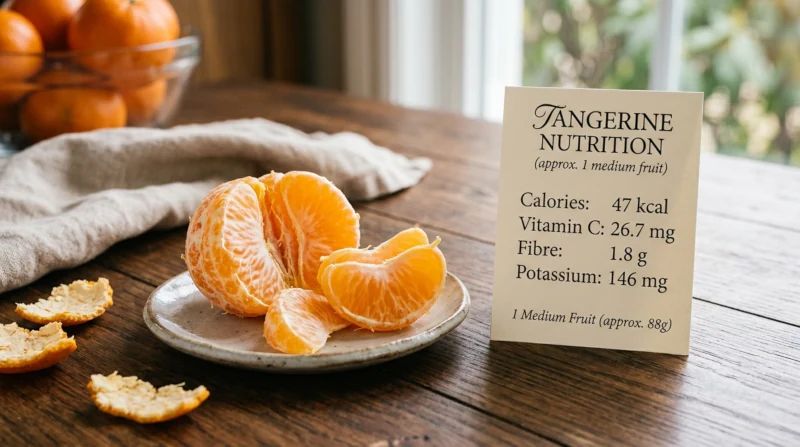
Tangerine health benefits: What’s actually in a tangerine
Per 100 grams of raw tangerine — roughly one and a half small clementines — the USDA lists the following (USDA FoodData Central, FDC ID 169105):
| Nutrient (per 100 g, raw) | Amount | % Daily Value |
| Energy | 53 kcal | — |
| Carbohydrates (of which sugars ~11 g) | 13.3 g | 4% |
| Dietary fibre | 1.8 g | 7% |
| Vitamin C | 27 mg | 30% |
| Potassium | 166 mg | 5% |
| Folate (B9) | 16 µg | 4% |
| Vitamin A (RAE) | 34 µg | 4% |
| Calcium | 37 mg | 4% |
| Water | 85 g | — |
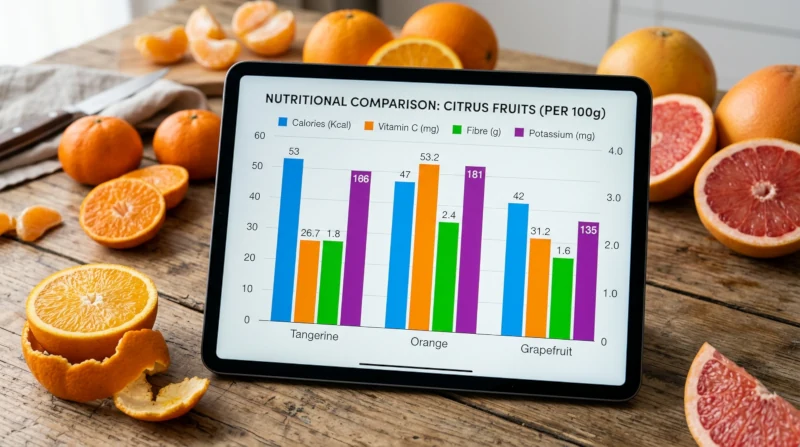
A standard 109 g serving — about one medium fruit — works out to roughly 58 calories and just under 30 mg of vitamin C. Gram for gram, a tangerine carries a little less fibre than an orange (USDA FoodData Central). It is a good everyday fruit. It is not a supplement.
Vitamin C: what one tangerine really does
Adults need 90 mg of vitamin C a day (men) or 75 mg (women); pregnancy raises that to 85 mg, breastfeeding to 120 mg, and smokers need an extra 35 mg on top (NIH Office of Dietary Supplements, 2021). One tangerine covers roughly a third of a woman’s target. Two, plus a normal day’s vegetables, and most people are comfortably there.
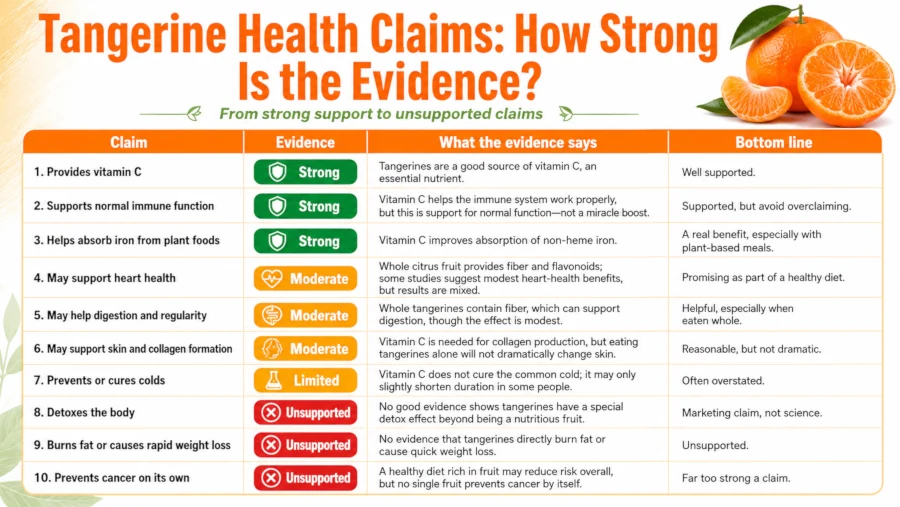
Now the part that gets oversold. The best evidence on vitamin C and colds is a Cochrane review of 29 trial comparisons in more than 11,000 people. Taking vitamin C regularly did not reduce how often people in the general population caught colds. It did shorten them — by about 8% in adults and 14% in children — and starting vitamin C after symptoms appear showed no consistent benefit at all (Hemilä & Chalker, Cochrane Review, 2013).
Keep the doses in view. Those trials used supplements of at least 200 mg a day, and often 1,000 mg or more. A tangerine gives you about 30 mg. So a bowl of tangerines in January is a pleasant way to keep your vitamin C status where it should be. It is not a cold treatment, and it will not stop you catching one. If you want the fuller picture on eating during illness, our guide to the best foods for cold and flu grades each option by evidence.
Fiber, sugar, and why the whole fruit beats the juice
Just under 2 grams of fibre per 100 g is modest, but it is the reason a tangerine behaves differently from a glass of juice. The fibre and the intact cell structure slow the release of the fruit sugars, so blood glucose rises more gradually. Squeeze the same fruit and most of that fibre ends up in the bin.
This matters most if you are managing blood sugar. Whole fruit — including citrus — fits into a diabetes-aware eating plan in sensible portions; juice and dried fruit are the ones to keep an eye on. Our list of diabetic-friendly foods goes into how to portion them.
Tangerines have one practical advantage over most citrus: they are easy. No knife, no plate, no sticky hands. For children, older adults, and anyone who reliably fails to eat fruit that needs preparing, “easy” is not a trivial benefit — it is the whole benefit, because the fruit you actually eat beats the fruit you meant to.
Tangerines, potassium, and blood pressure
Fruit is part of the DASH eating plan, which was built specifically to lower blood pressure and calls for four to five servings of fruit a day alongside vegetables, whole grains and much less sodium (NHLBI, DASH Eating Plan). A tangerine is one of those servings. That is the accurate claim.
What a tangerine is not is a blood-pressure treatment. At 166 mg of potassium per 100 g it is a light source, well behind bananas, potatoes or beans. If you are eating with your blood pressure in mind, the foods that actually move the needle are the potassium-heavy vegetables, legumes and whole grains — and cutting sodium. Tangerines help by being in the fruit column, not by doing anything special.
Flavonoids, carotenoids, and where the cancer evidence stops
Tangerines contain carotenoids (they are what makes them orange) and citrus flavonoids, and the peel is rich in compounds that behave interestingly in a petri dish. You will find plenty of pages that jump from that to “anti-cancer fruit.” The jump is not supported.
Here is the honest version. People who eat a lot of fruit and vegetables do tend to have lower rates of several cancers — but vitamin C supplements do not appear to protect against cancer, and whether vitamin C itself is doing the work in food is still unclear. The same uncertainty applies to heart disease (NIH Office of Dietary Supplements, 2021). Laboratory and animal findings on citrus compounds are early-stage research. No tangerine treats, prevents, or reverses any disease.
How many tangerines a day?
One or two, as part of the one and a half to two cups of fruit most adults are advised to eat daily. There is no evidence that six, eight, or a kilo of tangerines does anything a couple of pieces of fruit will not, and there are good reasons not to try.
Eating tangerines as your only food for days at a time is not a “treatment” — it is a mono-diet, and it leaves out protein, fat, and most micronutrients while flooding your mouth with acid. If you want a fruit-forward day, build it around variety rather than volume. And please skip anything marketed as a citrus “cleanse”: your liver and kidneys already do that job.
Who should be cautious with tangerines
If your medication says “avoid grapefruit”
This is the one that catches people. Grapefruit interferes with the CYP3A4 enzyme that breaks down dozens of drugs — certain statins, some calcium channel blockers, immunosuppressants such as cyclosporine, buspirone, budesonide, amiodarone, and the antihistamine fexofenadine, among others (FDA, Grapefruit Juice and Some Drugs Don’t Mix). The FDA extends that warning to Seville oranges, pomelos and tangelos — the tangerine-grapefruit cross. Mayo Clinic gives the same advice (Mayo Clinic, 2023).
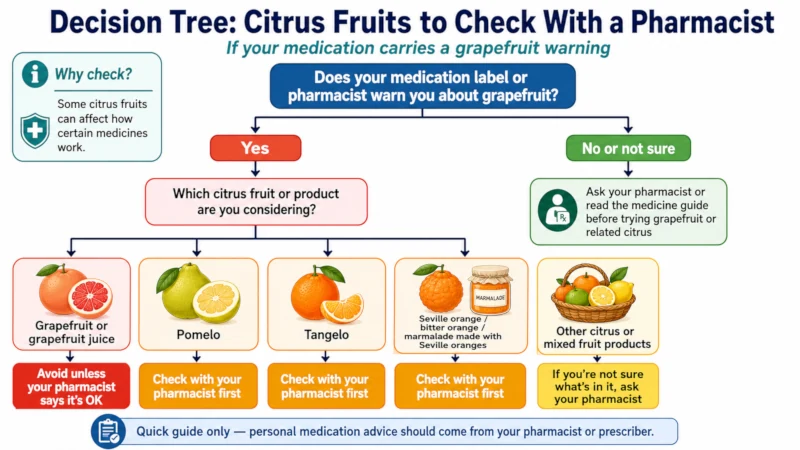
Ordinary mandarins and clementines are not on the FDA list. But supermarket “tangerines” are a loose category, and several popular varieties — Minneola and other tangelos among them — carry grapefruit or pomelo ancestry. If your prescription label warns against grapefruit, the safe move is not to guess at the produce aisle. Show your pharmacist what you actually buy and ask.
Chronic kidney disease — actually good news
If you are on a potassium-restricted diet, tangerines are one of the citrus fruits you may be able to keep. The National Kidney Foundation lists a whole tangerine and mandarin oranges among the lower-potassium fruit choices (under 200 mg per serving), while a medium orange and orange juice sit in the higher-potassium column (National Kidney Foundation, Potassium in Your CKD Diet). Portion size still decides everything, so agree your limits with your nephrologist or renal dietitian rather than with a web page.
Acid reflux and tooth enamel
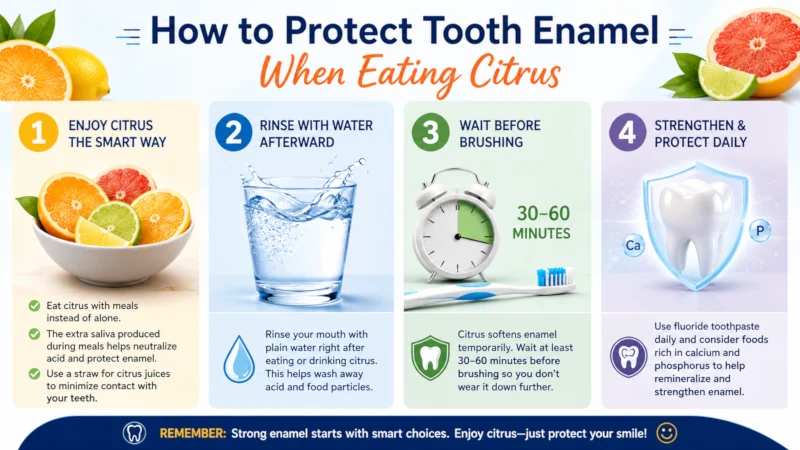
Citric acid can trigger heartburn in people prone to reflux; tolerance varies a lot, and eating fruit with a meal rather than alone helps some people. Your teeth deserve the same courtesy. The American Dental Association advises eating acidic foods such as citrus as part of a meal rather than on their own, rinsing with water afterwards, and waiting an hour before brushing so saliva can re-harden the enamel (ADA MouthHealthy). Enamel loss is permanent. Grazing on tangerines all afternoon is the habit to avoid — not the tangerine.
Citrus allergy and oral allergy syndrome
An itchy mouth or scratchy throat after raw citrus is usually pollen food allergy syndrome, a cross-reaction in people allergic to pollen — grass pollen is the one associated with oranges. Symptoms are typically confined to the mouth and settle quickly, though reactions beyond the mouth are possible and warrant an allergist’s opinion (American College of Allergy, Asthma & Immunology). True citrus allergy is uncommon but real.
Pregnancy and breastfeeding
Whole tangerines are fine, and the vitamin C target is slightly higher — 85 mg a day in pregnancy, 120 mg while breastfeeding (NIH Office of Dietary Supplements, 2021). The caution is not about fruit. It is about high-dose vitamin C supplements, which sit under a 2,000 mg daily upper limit for adults and are not something to start without medical advice.
A note on vitamin C supplements
Doses above the upper limit can cause diarrhoea, nausea and stomach cramps, and can worsen iron overload in people with haemochromatosis. Vitamin C supplements may also interfere with chemotherapy and radiotherapy, and in one study a vitamin C-containing antioxidant combination blunted the effect of a statin-plus-niacin regimen (NIH Office of Dietary Supplements, 2021). None of this applies to eating fruit. It applies to pills — which is worth remembering when someone tells you a tangerine is “nature’s vitamin C tablet.”
When to talk to a healthcare professional
- Your prescription label warns against grapefruit and you regularly eat tangelos, Minneolas, or citrus you cannot confidently identify — ask a pharmacist.
- You have chronic kidney disease and want to know how much fruit is safe for you.
- You get an itchy mouth, swollen lips, or a tight throat after eating raw citrus — and especially if symptoms ever spread beyond your mouth.
- You have persistent heartburn, tooth sensitivity, or visible enamel wear.
- You are pregnant, breastfeeding, or considering vitamin C supplements above the amounts in food.
Seek urgent care for signs of a severe allergic reaction after eating anything — swelling of the tongue or throat, difficulty breathing or swallowing, widespread hives, faintness. In the US, call 911.
| HEALTH DISCLAIMER: This article is for general education and information. It is not medical advice and is not a substitute for diagnosis or treatment from a qualified healthcare professional. Do not start, stop or change any medication, supplement or diet on the strength of this page. If you are pregnant or breastfeeding, take prescription medication, or have kidney disease, diabetes, reflux, or a food allergy, talk with your doctor, pharmacist or registered dietitian before making significant dietary changes. If you think you are having a medical emergency, call your local emergency number. |
Frequently Asked Questions
How much vitamin C is in one tangerine?
Roughly 30 mg in a medium (about 109 g) fruit, based on the USDA figure of 27 mg per 100 g (USDA FoodData Central). That is about a third of the daily target for an adult woman (75 mg) and a third for an adult man (90 mg) (NIH ODS).
Do tangerines help you fight off a cold?
Not in the way people hope. Regular vitamin C does not reduce how often adults catch colds; it shortens them by about 8% on average — and that finding comes from supplement trials using at least 200 mg a day, several times what a tangerine provides (Cochrane Review, 2013). Eat them because they help you hit your vitamin C target every day, not as a remedy.
Can I eat tangerines if I take medication?
Usually yes — ordinary mandarins and clementines are not on the FDA’s grapefruit-interaction list. The exception is tangelos (tangerine-grapefruit hybrids), which the FDA says may act like grapefruit (FDA). If your medication carries a grapefruit warning, check the specific variety with your pharmacist.
Are tangerines good or bad for kidney disease?
A whole tangerine is listed by the National Kidney Foundation as a lower-potassium fruit choice — under 200 mg per serving — unlike a medium orange (National Kidney Foundation). That makes it a reasonable option on a potassium-restricted diet, but portion sizes should come from your renal dietitian.
Is tangerine juice as good as the fruit?
No. Juicing removes most of the fibre, so the sugars hit your bloodstream faster and the drink is easier to overconsume. Eat the fruit; keep juice to a small glass with a meal if you want it.
How many tangerines can I eat in a day?
One or two fits most adults’ daily fruit target comfortably. There is no benefit to eating six or eight, and steady acid exposure through the day is bad for your enamel. Variety across different fruits beats volume of any one.
References
- U.S. Department of Agriculture, Agricultural Research Service. FoodData Central — Tangerines (mandarin oranges), raw. FDC ID 169105. → View source
- National Institutes of Health, Office of Dietary Supplements. Vitamin C — Fact Sheet for Consumers. Updated 22 March 2021. → View source
- Hemilä H, Chalker E. Vitamin C for preventing and treating the common cold. Cochrane Database of Systematic Reviews 2013, Issue 1. Art. No.: CD000980. DOI: 10.1002/14651858.CD000980.pub4. → View source
- U.S. Food and Drug Administration. Grapefruit Juice and Some Drugs Don’t Mix. Content current as of 1 July 2021. → View source
- Mayo Clinic. Grapefruit: Beware of dangerous medication interactions. 13 July 2023. → View source
- National Heart, Lung, and Blood Institute (NHLBI), NIH. DASH Eating Plan. → View source
- National Kidney Foundation. Potassium in Your CKD Diet. Last updated 5 May 2023. → View source
- American Dental Association (MouthHealthy). Erosion: What You Eat and Drink Can Impact Teeth. → View source
- American College of Allergy, Asthma & Immunology. Pollen Food Allergy Syndrome. → View source
- FoodStruct. Mandarin orange nutrition (reproduction of USDA FDC record 169105) — used only to confirm the USDA values above. → View source
