
Herbs for stomach disorders have a long history, but only a handful have solid human research behind them. Peppermint oil, ginger, and turmeric stand out: each has been tested in randomized trials for a specific digestive problem, and each works through a mechanism scientists can describe. Most other “stomach herbs” rest on tradition or on animal and lab studies — worth knowing about, but not the same as proof.
This guide sorts the common options by how strong the evidence is, matches each one to the problem it actually helps, and flags the safety issues that matter — including the symptoms that mean you should stop self-treating and call a doctor.
“Stomach disorder” covers a lot: indigestion (which doctors call functional dyspepsia), the cramping and pain of irritable bowel syndrome, nausea, the inflammation of gastritis, and peptic ulcers. Herbs can ease symptoms in some of these. What they cannot do is replace a diagnosis. Two of the most common causes of ulcers and gastritis — the bacterium Helicobacter pylori and regular use of anti-inflammatory painkillers (NSAIDs) — need specific medical treatment [American College of Gastroenterology].
Herbs with the strongest evidence
Peppermint oil, for IBS cramping and pain
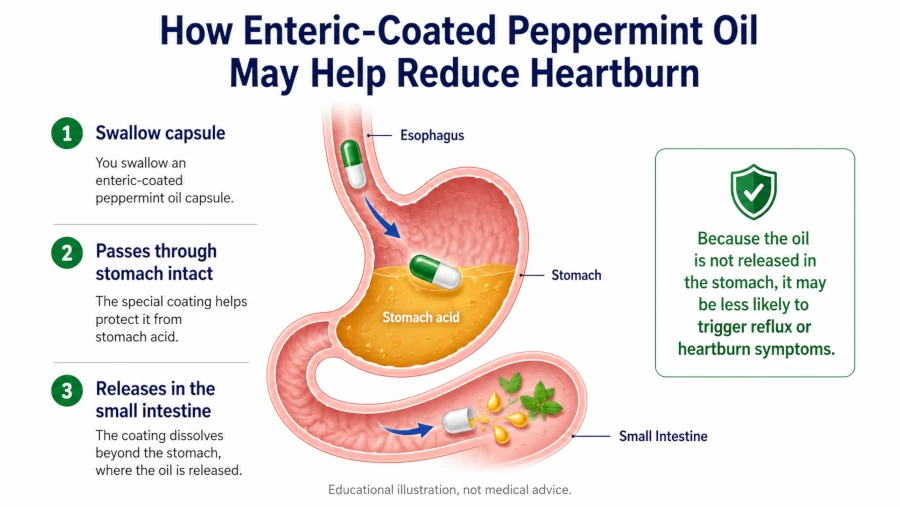
Peppermint is the most studied herb for the gut, and the useful form is specific: enteric-coated capsules of peppermint oil, not tea. A 2014 meta-analysis pooled nine trials of 726 people with irritable bowel syndrome and found peppermint oil more than twice as likely as placebo to improve overall symptoms [Khanna, 2014]. A 2022 review of 10 trials (1,030 participants) reached a similar conclusion — better symptom relief than placebo — while noting it caused more side effects [Ingrosso & Black, 2022]. On the strength of evidence like this, the American College of Gastroenterology recommends peppermint oil for IBS symptom relief [NCCIH, 2024].
Menthol, the active compound, relaxes the smooth muscle in the gut wall, which eases the spasms behind cramping and pain [NCCIH, 2020]. That same muscle-relaxing effect is why the coating matters: uncoated peppermint can relax the valve at the top of the stomach and trigger heartburn. Reflux and a burning feeling are the most common side effects reported in trials.
Ginger, for nausea
Ginger has the best evidence of any herb for nausea. A meta-analysis of 12 randomized trials in 1,278 pregnant women found that ginger significantly reduced nausea compared with placebo [Viljoen, 2014]. The U.S. National Center for Complementary and Integrative Health summarizes the research the same way: ginger appears helpful for the nausea and vomiting of pregnancy, and has been studied for chemotherapy-related and post-surgery nausea too [NCCIH, Ginger].
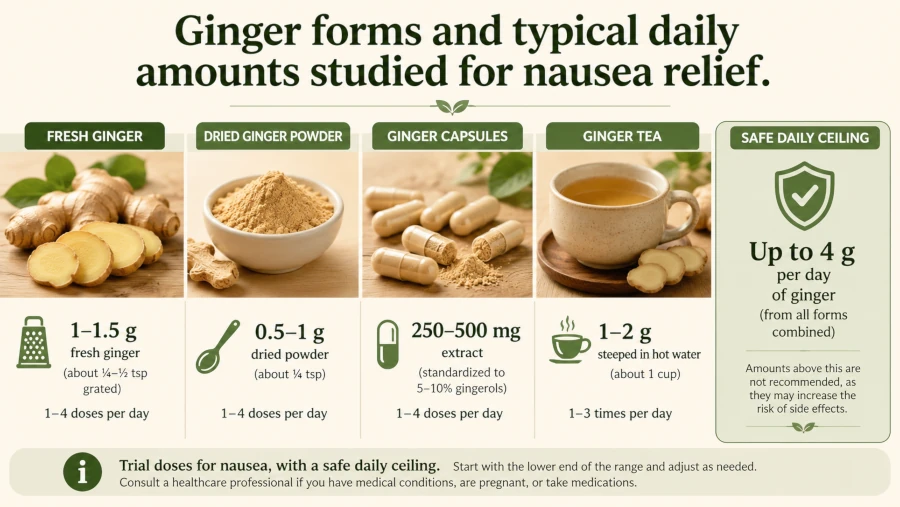
One honest detail: ginger tends to cut the feeling of nausea more than it reduces the number of vomiting episodes. Trials used roughly 0.5 to 1.5 grams a day, usually split into doses, as capsules, tea, or chews. Keep total intake to about 4 grams a day or less. Belching and mild heartburn are the usual complaints.
Turmeric (curcumin), for indigestion
Turmeric earned attention from a 2023 trial that put it head-to-head with a standard acid-reducing drug. Researchers randomly assigned 206 adults with functional dyspepsia to curcumin (500 mg, four times a day), the proton-pump inhibitor omeprazole, or both. Over 28 days, curcumin relieved indigestion symptoms about as well as omeprazole [Kongkam, 2023].
That result is promising, but read it carefully. The trial had no placebo-only group, ran for a short time, and was done in one region — so “as good as omeprazole” is not the same as a clear win over a dummy pill. Curcumin is also poorly absorbed on its own, which is why many supplements pair it with black-pepper extract (piperine) to help the body take it up.
Herbs with limited or traditional evidence
Licorice, and why the form matters
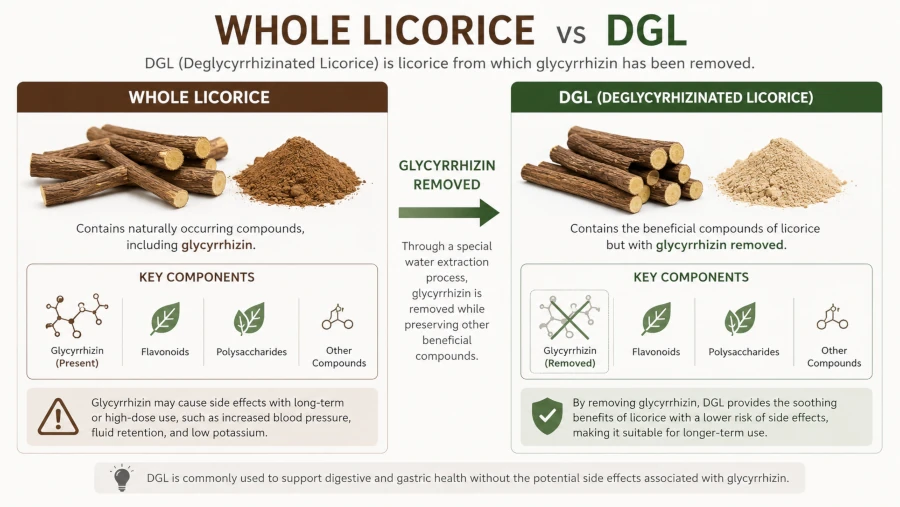
Licorice root has been used for stomach complaints for centuries, and the form changes both the benefit and the risk. A deglycyrrhizinated extract — “DGL,” with the compound glycyrrhizin removed — improved functional dyspepsia symptoms versus placebo in a 2012 trial of 50 adults taking 75 mg a day for 30 days [Raveendra, 2012]. For ulcers specifically, the evidence is thinner: health authorities say there is not enough reliable data to conclude that licorice heals stomach ulcers [NCCIH, Licorice].
The safety point is the important one. Whole licorice that still contains glycyrrhizin can raise blood pressure, lower potassium, and cause irregular heart rhythms — sometimes from small amounts in people who eat a lot of salt or who have high blood pressure, heart disease, or kidney problems [NCCIH, Licorice]. Pregnancy is a clear avoid. DGL removes glycyrrhizin and is the form used for digestion for exactly this reason.
Chamomile, fennel, and caraway: the carminative teas
Fennel, caraway, and chamomile are traditional “carminatives” — herbs taken to settle gas, bloating, and mild cramping. Most of the rigorous evidence is for combinations rather than single teas. Peppermint paired with caraway oil has moderate-certainty evidence for relieving functional dyspepsia. A multi-herb European product called STW5 (which blends chamomile, caraway, licorice, and peppermint, among others) may modestly help dyspepsia, though a Cochrane review rated the certainty of that evidence as very low [Cochrane, 2020].
Taken as simple teas, chamomile and fennel are gentle and low-risk for most adults, which is part of their appeal. Just don’t expect a tea to do what a diagnosis and treatment would. (Note that an older STW5 formula contained greater celandine, later removed over liver-safety concerns — a reminder that “herbal” and “risk-free” are not the same thing.)
Cabbage juice: a historical footnote
Raw cabbage juice is often presented as an ulcer cure, and the claim traces to a single 1949 study: 13 patients drank about a liter a day, and their ulcers appeared to heal faster than was typical at the time [Cheney, 1949]. It is a genuine piece of medical history, not a modern treatment. The study was tiny, had no control group, and came decades before researchers learned that most ulcers are driven by H. pylori and NSAIDs — which is what today’s treatment actually targets. Treat cabbage juice as a curiosity, not a substitute for ulcer care.
Choosing herbs for stomach disorders: match the remedy to the problem
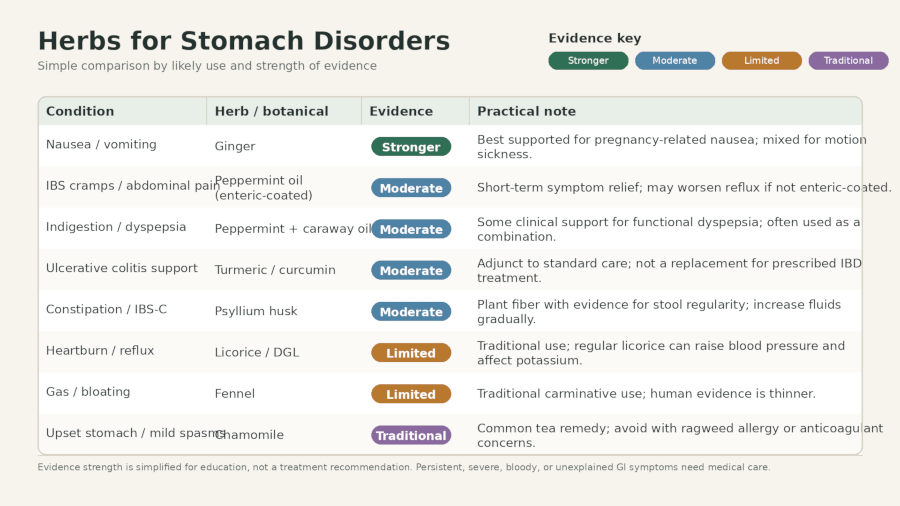
Different complaints respond to different herbs, and the evidence behind each pairing varies. The table below is a quick map — read the safety section underneath before acting on it.
| Problem | Best-supported herb(s) | Evidence | Keep in mind |
| Indigestion (functional dyspepsia) | Curcumin (turmeric); peppermint + caraway oil; DGL licorice | Moderate to limited | Rule out red-flag symptoms first |
| Nausea | Ginger | Moderate to strong (pregnancy nausea) | Eases nausea more than vomiting |
| IBS cramping and abdominal pain | Enteric-coated peppermint oil | Moderate | Can worsen heartburn / reflux |
| Gas and bloating | Fennel, caraway, chamomile (teas) | Mostly traditional | Gentle; low risk for most people |
| Gastritis or ulcer (as an add-on only) | DGL licorice | Limited | Needs a diagnosis and H. pylori testing |
Evidence labels reflect the quality and quantity of human studies, not a guarantee of results for any one person.
Safety: what to check before trying any stomach herb
“Natural” does not mean “harmless.” Herbs are active compounds, and the same properties that help digestion can cause problems in the wrong situation. A few that come up often:
- Reflux and peppermint. Peppermint relaxes the valve between the esophagus and stomach, so it can worsen GERD, heartburn, or a hiatal hernia. The enteric-coated oil capsules are designed to bypass this; loose tea is more likely to aggravate reflux.
- Licorice and your heart, blood pressure, and potassium. Glycyrrhizin-containing licorice can be dangerous alongside diuretics or heart medications, and for anyone with hypertension or heart, kidney, or potassium issues. Choose DGL, and keep whole-licorice intake low [NCCIH, Licorice].
- Blood thinners. High-dose ginger and turmeric have a theoretical effect on clotting. If you take warfarin, a DOAC, or daily aspirin, ask your clinician before using concentrated supplements.
- Gallbladder disease. Concentrated turmeric/curcumin can stimulate the gallbladder and is not recommended if you have gallstones or a blocked bile duct.
- Pregnancy and breastfeeding. Ginger up to about 1 gram a day is generally considered an acceptable option for pregnancy nausea, but confirm with your provider. Avoid glycyrrhizin licorice in pregnancy. Turmeric as a cooking spice is fine; concentrated supplements are not well studied in pregnancy.
Realistic expectations. These herbs ease symptoms; they do not cure an H. pylori infection or heal an NSAID-related ulcer. Supplement strength and purity also vary, because supplements are not regulated as tightly as medicines. Give any remedy a fair trial of two to four weeks, and stop if it doesn’t help or if symptoms get worse.
Red flags: when to stop and get medical help
Call 911 or go to an emergency room if you have any of these signs of bleeding or a perforated ulcer [ACG] [Johns Hopkins]:
- Vomiting blood, or material that looks like coffee grounds
- Black, tarry, or bloody stools
- Sudden, severe abdominal pain
- Fainting, lightheadedness, or a racing heart
See a doctor soon — don’t rely on herbs — if you have:
- New indigestion that starts after about age 55–60
- Unintentional weight loss, or trouble or pain when swallowing
- Persistent vomiting, a lump, or pain that keeps coming back
- Ongoing fatigue or a low blood count (anemia)
- Symptoms that don’t improve within a couple of weeks, or that keep returning after antacids
These rules exist because serious problems can hide behind “just indigestion.” Ulcers — usually from H. pylori or NSAIDs — and, rarely, stomach cancer can produce the same early symptoms an herb might mask [Johns Hopkins]. Easing a symptom while the cause continues is the real risk of self-treatment.
| HEALTH DISCLAIMER This article is for general education and information only. It is not medical advice and is not a substitute for diagnosis or treatment by a qualified clinician. Herbs and supplements can interact with medications and existing conditions. If you are pregnant or breastfeeding, take prescription medication, or have a heart, blood pressure, kidney, liver, or bleeding condition, talk to your doctor or pharmacist before using any herbal remedy. If you have severe abdominal pain, are vomiting blood or material that looks like coffee grounds, or have black or bloody stools, seek emergency care now. |
Frequently Asked Questions
Can herbs cure a stomach ulcer?
No. Most ulcers are caused by H. pylori bacteria or by NSAID painkillers, and they’re treated with antibiotics and acid-reducing medication. Some herbs (such as DGL licorice) may ease symptoms as an add-on, but they don’t clear the infection or replace treatment, and the ulcer-healing evidence for them is limited.
What’s the best herb for indigestion?
Curcumin from turmeric has the most recent trial support for functional dyspepsia, where it performed comparably to a standard acid-reducer over four weeks. Peppermint-plus-caraway oil also has moderate evidence. Both ease symptoms; neither addresses an underlying cause, so persistent indigestion still deserves a check-up.
Is peppermint tea as effective as peppermint oil capsules?
No. The IBS research used enteric-coated peppermint oil capsules, not tea. Tea is pleasant and may feel soothing, but it delivers far less menthol and can worsen heartburn in people prone to reflux.
How much ginger is safe for nausea?
Trials generally used about 0.5 to 1.5 grams a day, split into doses. Staying under roughly 4 grams a day is a common ceiling. If you’re pregnant or take blood thinners, confirm the amount with your clinician first.
Are herbal supplements regulated for safety?
Not the way prescription drugs are. In many countries, supplements don’t have to prove effectiveness before sale, and strength and purity can vary between brands. Look for third-party testing, and tell your doctor and pharmacist about anything you take so they can check for interactions.
References
- National Center for Complementary and Integrative Health (NCCIH). Peppermint Oil: Usefulness and Safety. → View source
- NCCIH. Ginger: Usefulness and Safety. → View source
- NCCIH. Irritable Bowel Syndrome: What You Need To Know. → View source
- NCCIH. Licorice Root: Usefulness and Safety. → View source
- Khanna R, MacDonald JK, Levesque BG. Peppermint oil for the treatment of irritable bowel syndrome: a systematic review and meta-analysis. J Clin Gastroenterol. 2014. (9 trials, 726 patients.) → View source
- Ingrosso MR, Black CJ, Ford AC, et al. Systematic review and meta-analysis: efficacy of peppermint oil in irritable bowel syndrome. Aliment Pharmacol Ther. 2022. (10 trials, 1,030 participants.) → View source
- Viljoen E, Visser J, Koen N, Musekiwa A. A systematic review and meta-analysis of the effect and safety of ginger in the treatment of pregnancy-associated nausea and vomiting. Nutr J. 2014;13:20. (12 RCTs, 1,278 women.) → View source
- Kongkam P, Khongkha W, et al. Curcumin and proton pump inhibitors for functional dyspepsia: a randomised, double-blind controlled trial. BMJ Evid Based Med. 2023. (206 adults.) → View source
- Raveendra KR, et al. An Extract of Glycyrrhiza glabra (GutGard) Alleviates Symptoms of Functional Dyspepsia: A Randomized, Double-Blind, Placebo-Controlled Study. Evid Based Complement Alternat Med. 2012;2012:216970. → View source
- Cheney G. Rapid healing of peptic ulcers in patients receiving fresh cabbage juice. Calif Med. 1949;70(1):10–15. → View source
- Giljaca V, et al. STW5 (Iberogast) for functional dyspepsia. Cochrane Database of Systematic Reviews. 2020. → View source
- American College of Gastroenterology. Peptic Ulcer Disease (patient information). → View source
- Johns Hopkins Medicine. Stomach and Duodenal Ulcers (Peptic Ulcers). → View source
