
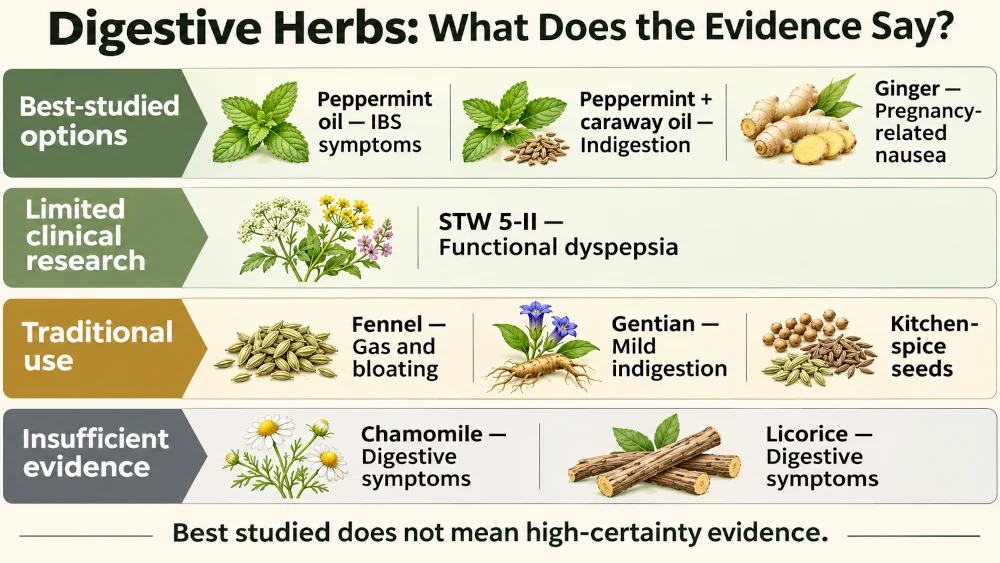
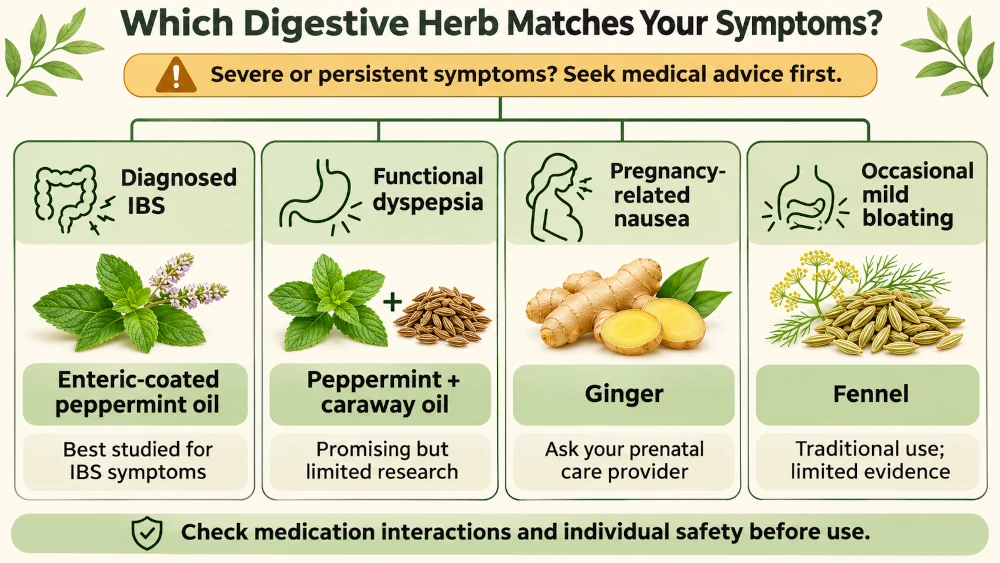
If you want a plant that settles your stomach, the honest list is short. Enteric-coated peppermint oil has the most support, for the cramping and pain of irritable bowel syndrome (IBS). A peppermint-and-caraway oil combination has helped people with recurring indigestion in small trials. Ginger can ease nausea in pregnancy. Most other herbs for the digestive system — fennel, chamomile, gentian, anise and the rest of the spice rack — rest on long tradition and lab findings rather than solid human trials. And a few plants that still turn up on digestive-herb lists, such as belladonna and sweet flag, are risky enough that you shouldn’t take them at all.
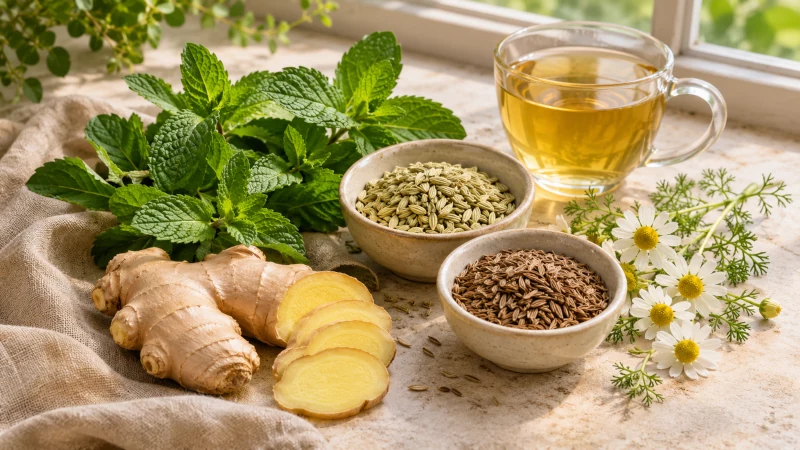
Herbs also can’t make up for the basics. If meals are rushed, heavy, or built around foods that don’t agree with you, no tea will fix that. Below, the common digestive herbs are sorted by how good the evidence is, so you can match the herb to the problem and know when to stop treating yourself.
What digestive herbs can realistically do
Traditional herbalism sorts these plants by action. Carminatives such as fennel, caraway and anise were used for gas. Bitters such as gentian were taken before meals to stir appetite. Antispasmodics such as peppermint were used for cramping. Some of this has a lab basis: Europe’s medicines regulator notes that fennel extracts relax contracted smooth muscle in isolated tissue
A relaxed strip of gut in a dish isn’t a person with bloating, though. Where herbs have been tested properly in people, it’s mostly in functional gut disorders: IBS, and functional dyspepsia — recurring upper-belly pain, fullness or early satiety with no ulcer or other visible cause. That is where the evidence below comes from. Herbs are not a treatment for ulcers, gallstones, inflammatory bowel disease, celiac disease or infections, and those can feel a lot like “just indigestion.”
Herbs for the digestive system with the best evidence
Peppermint oil for IBS pain and cramping
Peppermint is the one herb a major gastroenterology guideline names. The American College of Gastroenterology suggests peppermint for relief of overall IBS symptoms — a conditional recommendation based on low-quality evidence [ACG, 2021]. That’s a cautious endorsement, but it’s more than most herbs get.
The most recent pooled analysis combined 10 randomized trials with 1,030 people. Peppermint oil beat placebo for overall IBS symptoms and for abdominal pain; for pain, about seven people needed to take it for one extra person to improve. Side effects were also more common with peppermint oil, and the reviewers rated the quality of the evidence as very low [Ingrosso et al., 2022].
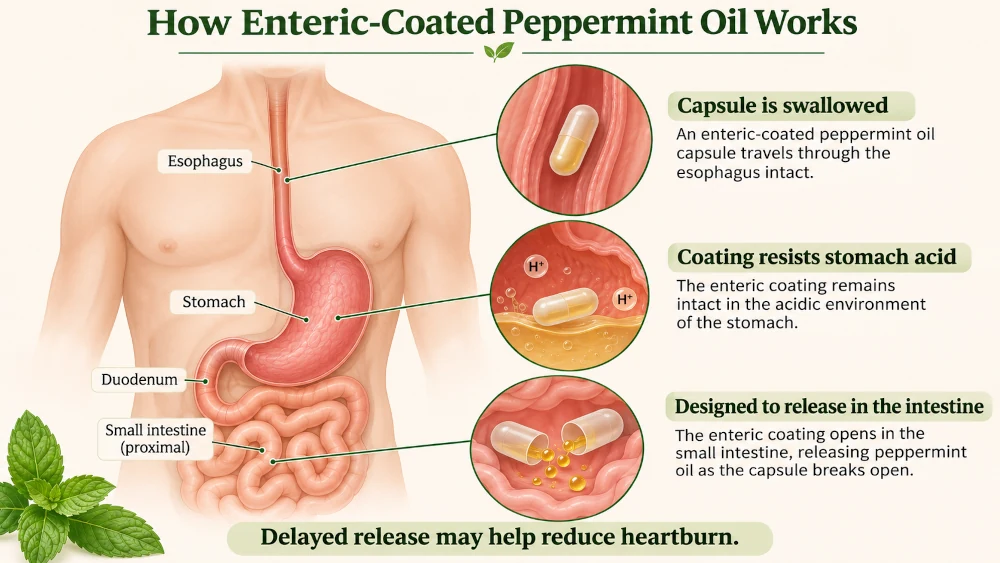
In practice, it’s a reasonable thing to try once a clinician has diagnosed IBS. The studied form is enteric-coated capsules, which are designed to reduce heartburn [NCCIH Peppermint Oil, 2025]. Peppermint tea is a different product and hasn’t been tested the same way. Taken by mouth, peppermint oil can cause heartburn, nausea, abdominal pain and dry mouth, so if reflux is one of your main problems it may not suit you. Our guide to peppermint’s evidence-backed benefits goes further.
Peppermint plus caraway oil for recurring indigestion
On its own, peppermint oil hasn’t been shown to help indigestion, and NCCIH notes it may make indigestion worse for some people [NCCIH Peppermint Oil, 2025]. Paired with caraway oil, the picture changes. A 2019 meta-analysis of five placebo-controlled trials (578 people, four weeks each) found the combination improved overall functional dyspepsia symptoms: about 56% of people taking it were much or very much better, against about 26% on placebo. Side effects, mostly nausea and belching, were no more common than with placebo [Li et al., 2019].
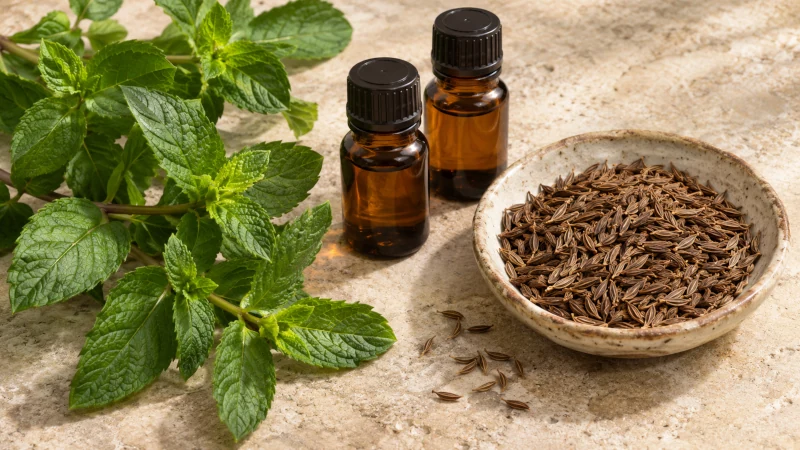
The caveats are real. The trials were few and short, diagnostic criteria varied, some participants may also have had IBS, and the authors graded the evidence low to very low [Li et al., 2019]. Promising, not proven. If you’re curious about the seed itself as a tea, see what caraway seeds can and can’t do for digestion.
Ginger for nausea — and not much else in the gut
Research shows ginger may help with nausea and vomiting in pregnancy. Whether it adds anything to standard treatment for chemotherapy nausea or nausea after surgery is unclear, and most studies haven’t found it useful for motion sickness [NCCIH Ginger, 2025]. For general indigestion its reputation comes mainly from folk use — and swallowed ginger can itself cause heartburn, diarrhea, stomach discomfort and mouth or throat irritation.
Ginger supplements during pregnancy may be safe, but check with your prenatal care provider first [NCCIH Ginger, 2025]. More detail is in our ginger guide, including when to see a doctor instead.
Multi-herb formulas
Some European products blend several digestive herbs. STW 5-II, a liquid of six herbs — bitter candytuft, caraway, licorice, chamomile, lemon balm and peppermint — improved fullness, early satiety and upper-abdominal pain more than placebo in a pooled analysis of two trials, with side-effect rates similar to placebo. The effects were modest, the analysis was funded by the manufacturer, and it rests on a small number of studies [Andresen et al., 2024].
The older formula, STW 5, also contains greater celandine. In 2018 Germany’s drug regulator required liver-toxicity warnings, plus a contraindication in pregnancy and breastfeeding, for celandine-containing products taken by mouth after reports of liver injury, including a fatal case of liver failure [AkdÄ, 2018]. If you use any multi-herb digestive product, check the label for celandine (Chelidonium majus).
Traditional digestive herbs with limited evidence
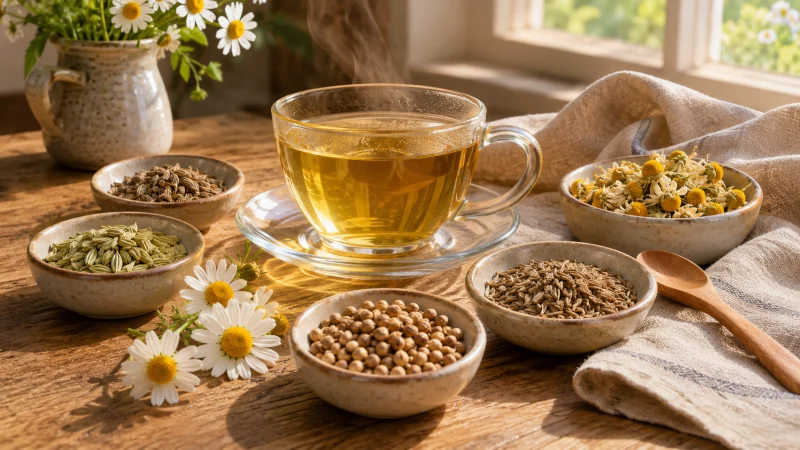
Many herbs have centuries of digestive use and little modern testing. That doesn’t make them useless — gentle, food-like herbs are often fine to try for occasional gas — but expect modest effects at best.
Fennel
The European Medicines Agency accepts sweet fennel fruit for the traditional treatment of mild, spasm-type gut complaints, including bloating and wind, while noting that clinical trials are limited. Its guidance: generally use for no more than one to two weeks, not for children under 4, and — as a precaution, because it hasn’t been studied there — not during pregnancy or breastfeeding [EMA Sweet Fennel, n.d.]. Our fennel seed guide covers tea preparation and concentrated forms.
Chamomile
Chamomile tea is a popular after-dinner settler, but studies haven’t produced enough reliable evidence to rate it for specific digestive conditions. Combination products containing chamomile may help infant colic; chamomile alone hasn’t been shown to [NCCIH Chamomile, 2024]. People allergic to ragweed, chrysanthemums, marigolds or daisies are more likely to react to it, and interactions with the blood thinner warfarin have been reported. See our German chamomile review for its safety cautions.
Gentian and other bitters
Gentian root is the classic bitter. The EMA accepts it, on the strength of traditional use, for temporary loss of appetite and mild indigestion in adults only, and advises seeing a doctor if symptoms last longer than two weeks or get worse. The one study it describes had no comparison group, so it couldn’t draw firm conclusions [EMA Gentian Root, n.d.]. Our gentian guide explains why wild-harvesting the root is risky.
Licorice
Licorice shows up in many digestive blends, but it’s unclear whether licorice on its own helps digestive symptoms. The glycyrrhizin in ordinary licorice can cause serious effects, including irregular heartbeat and cardiac arrest, especially with large or long-term use; even small amounts have caused problems in people who eat a lot of salt or have high blood pressure, heart disease or kidney disease. Large amounts are unsafe in pregnancy. Deglycyrrhizinated licorice (DGL) has the glycyrrhizin taken out and might be safe for up to four months, though NCCIH doesn’t assess it for digestion [NCCIH Licorice Root, 2025]. See our licorice root guide for who should avoid it.
Kitchen-spice seeds
Anise, coriander, cumin, dill and caraway seed share the same traditional role as carminatives. In everyday cooking amounts they’re ordinary foods. We did not find good-quality human trials testing any of them alone as a digestive remedy, so treat a cup of seed tea as a comfort measure rather than a treatment.
Evidence at a glance
| Herb | Best-studied digestive use | Evidence | Main cautions |
| Peppermint oil (enteric-coated) | IBS: overall symptoms, abdominal pain | Moderate support; very low-quality trials | Heartburn, nausea; may worsen indigestion alone |
| Peppermint + caraway oil | Functional dyspepsia | Promising; few short trials | Nausea, belching |
| Ginger | Nausea in pregnancy | Some support | Heartburn, diarrhea; ask before use in pregnancy |
| STW 5-II (six-herb blend) | Functional dyspepsia | Modest; maker-funded | Check for celandine in older STW 5 |
| Fennel | Bloating, wind | Traditional use; limited trials | Not under 4, pregnancy or breastfeeding; allergy |
| Chamomile | Indigestion (claimed) | Insufficient | Ragweed-family allergy; warfarin |
| Gentian | Poor appetite, mild indigestion | Traditional use | Adults only; stop after 2 weeks without improvement |
| Licorice | Digestive blends | Weak | Blood pressure, heart rhythm, pregnancy |
| Belladonna, sweet flag, aloe latex | — | — | Avoid (see below) |
Digestive herbs to skip
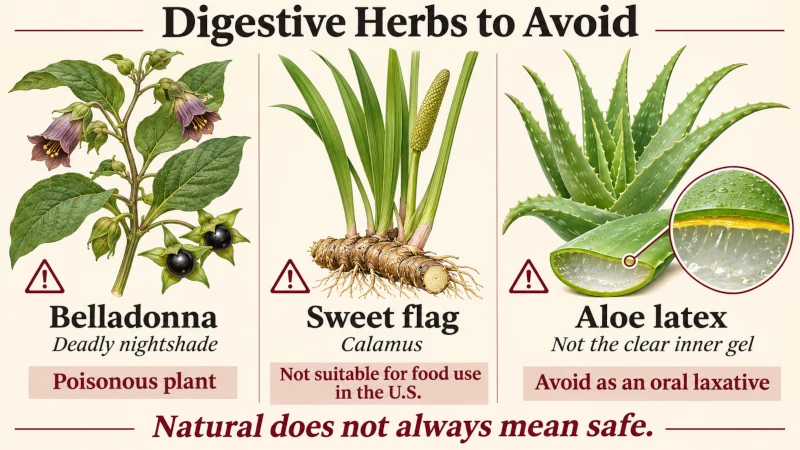
Long lists of “digestive herbs” on herbal sites often mix gentle kitchen herbs with plants that can do real harm. These three don’t belong in your cupboard:
- Belladonna (deadly nightshade). All parts of the plant are poisonous, and there’s no good scientific evidence for the uses people try it for [MedlinePlus, n.d.]. Its alkaloid atropine is a genuine prescription drug, which is exactly why home dosing of the plant is dangerous. Read more on belladonna’s toxicity.
- Sweet flag (calamus). Under U.S. federal rules dating to a 1968 order, food containing added calamus, calamus oil or calamus extract is deemed adulterated [21 CFR §189.110]. Our sweet flag safety review explains the concern over its β-asarone content.
- Aloe latex as a laxative. In 2002 the FDA required manufacturers to remove aloe latex from over-the-counter laxatives because safety data were lacking. Swallowed latex can cause cramps and diarrhea; oral leaf extracts have been linked to cases of acute hepatitis; and a non-decolorized whole-leaf extract caused gut cancers in rats and mice [NCCIH Aloe Vera, 2025]. For constipation, ask a pharmacist about approved options. Our aloe vera guide separates its skin uses from the risks of swallowing it.
Safety before you try any digestive herb
Common side effects. Peppermint oil: heartburn, nausea, abdominal pain, dry mouth [NCCIH Peppermint Oil, 2025]. Ginger: heartburn, diarrhea, stomach discomfort [NCCIH Ginger, 2025]. Chamomile: nausea, dizziness and allergic reactions, occasionally severe [NCCIH Chamomile, 2024]. Fennel: mainly skin or breathing allergies [EMA Sweet Fennel, n.d.].
Medication interactions. Check with a pharmacist if you take any regular medicine; some herbs and drugs interact in harmful ways. Reported or documented examples include chamomile with warfarin [NCCIH Chamomile, 2024], licorice with corticosteroids [NCCIH Licorice Root, 2025], and overuse of aloe latex with digoxin-type heart drugs [NCCIH Aloe Vera, 2025].
Pregnancy and breastfeeding. Peppermint in food amounts is likely safe, but little is known about medicinal doses [NCCIH Peppermint Oil, 2025]. Ginger supplements may be safe — ask first [NCCIH Ginger, 2025]. Medicinal fennel products aren’t recommended [EMA Sweet Fennel, n.d.], large amounts of licorice are unsafe [NCCIH Licorice Root, 2025], oral aloe may be unsafe [NCCIH Aloe Vera, 2025], and celandine-containing products are contraindicated [AkdÄ, 2018].
Children. Don’t apply menthol to the face of infants or young children or let them inhale it; it may affect their breathing [NCCIH Peppermint Oil, 2025]. Medicinal fennel isn’t recommended under age 4 [EMA Sweet Fennel, n.d.], and gentian medicines are for adults only [EMA Gentian Root, n.d.].
Who should be especially careful. People with reflux (peppermint), ragweed-family allergies (chamomile), and high blood pressure, heart or kidney disease (licorice).
When digestive symptoms need a doctor, not an herb

Get medical care right away if indigestion comes with any of the following [NIDDK, n.d.]:
- pain in your chest, jaw, neck or arm
- shortness of breath
- difficulty or pain when swallowing
- frequent vomiting, or vomit with blood in it
- severe, constant abdominal pain
- long-lasting bloating or swelling of your abdomen
- black, tarry stools
- yellowing of your eyes or skin
- weight loss without trying, or loss of appetite
Also see a doctor if indigestion keeps coming back or doesn’t improve. A lasting loss of appetite in particular deserves a diagnosis before any bitter tonic — it can come from problems anywhere along the digestive tract, and from conditions outside it.
| HEALTH DISCLAIMER: This article is for general information and does not replace advice, diagnosis or treatment from a qualified health professional. Herbal products are not reviewed for safety and effectiveness the way prescription medicines are, and their strength can vary between brands. Talk to your doctor or pharmacist before using any herb medicinally, especially if you are pregnant or breastfeeding, giving it to a child, taking prescription medicines, or living with a long-term health condition. If you have any of the warning signs listed above, seek medical care promptly. |
Frequently Asked Questions
What is the best herb for the digestive system?
It depends on the symptom. Enteric-coated peppermint oil has the most support for IBS pain and overall symptoms [Ingrosso et al., 2022]; a peppermint-and-caraway oil combination for recurring indigestion [Li et al., 2019]; and ginger for nausea in pregnancy [NCCIH Ginger, 2025]. No single herb improves digestion across the board.
Is peppermint tea as good as peppermint oil capsules?
Not necessarily. The trials used enteric-coated capsules, which are designed to limit heartburn, and peppermint oil alone may worsen indigestion in some people [NCCIH Peppermint Oil, 2025]. Tea is fine as a drink, but don’t expect trial-level results.
Which herbs help with gas and bloating?
Fennel is accepted in Europe for traditional relief of bloating and wind, though trials are limited [EMA Sweet Fennel, n.d.]. Caraway is used the same way. If bloating lasts a long time or your abdomen swells, see a doctor [NIDDK, n.d.].
Are digestive herbs safe during pregnancy?
Some are, at food amounts. Ginger supplements may be safe with your provider’s OK [NCCIH Ginger, 2025], but medicinal fennel products aren’t recommended [EMA Sweet Fennel, n.d.] and large amounts of licorice are unsafe [NCCIH Licorice Root, 2025]. Ask before taking any herb medicinally.
How long should I try an herbal remedy before seeing a doctor?
The EMA’s guidance on gentian is to see a doctor if symptoms last more than two weeks or worsen [EMA Gentian Root, n.d.], and fennel products are generally limited to one to two weeks [EMA Sweet Fennel, n.d.]. Any red-flag symptom means skipping the trial period entirely.
References
- American College of Gastroenterology. ACG Clinical Guideline: Management of Irritable Bowel Syndrome. View source
- Arzneimittelkommission der deutschen Ärzteschaft (AkdÄ). View source
- Andresen V, Shah A, Fink C, Rabini S, Wargenau M, Holtmann G. Efficacy and Safety of STW 5-II for Functional Dyspepsia Treatment: A Patient Data-Based Meta-Analysis. View source
- U.S. Code of Federal Regulations. 21 CFR §189.110 — Calamus and its derivatives. View source
- European Medicines Agency, HMPC. Foeniculi dulcis fructus (sweet fennel fruit) — herbal medicinal product summary. View source
- European Medicines Agency, HMPC. Gentianae radix (gentian root) — herbal medicinal product summary. View source
- Ingrosso MR, Ianiro G, Nee J, Lembo AJ, Moayyedi P, Black CJ, Ford AC. Systematic review and meta-analysis: efficacy of peppermint oil in irritable bowel syndrome. View source
- Li J, Lv L, Zhang J, Xu L, Zeng E, Zhang Z, Wang F, Tang X. A Combination of Peppermint Oil and Caraway Oil for the Treatment of Functional Dyspepsia: A Systematic Review and Meta-Analysis. View source
- MedlinePlus (U.S. National Library of Medicine). Belladonna. View source
- National Center for Complementary and Integrative Health. Aloe Vera. View source
- National Center for Complementary and Integrative Health. Chamomile. View source
- National Center for Complementary and Integrative Health. Ginger. View source
- National Center for Complementary and Integrative Health. Licorice Root. View source
- National Center for Complementary and Integrative Health. Peppermint Oil. View source
- National Institute of Diabetes and Digestive and Kidney Diseases. Symptoms & Causes of Indigestion. View source


