Let’s be straight with you from the first line: no herb scrubs plaque out of your arteries. Not garlic, not ginkgo, not any tea or tincture. Once fatty plaque has built up inside an artery wall, even powerful prescription drugs only shrink it slowly and partially — one review of the best regression studies found measurable change took close to two years of treatment, and researchers note that arteries don’t simply return to their original state [Frontiers, 2024].
So why search for herbs that clean the arteries at all? Because the question underneath is a good one: can plants help me protect my heart and arteries? And there, the answer is a genuine yes — with realistic expectations. A handful of herbs and plant foods nudge down the things that damage arteries in the first place: blood pressure, LDL cholesterol, and inflammation. They won’t replace medical care, but they’re a real part of a heart-healthy life. Here’s what’s actually worth your attention, ranked by how good the evidence is.
Can herbs actually clean out your arteries?
Atherosclerosis — the buildup of cholesterol-rich plaque inside artery walls — develops over decades. The marketing language of “flushing,” “unclogging,” or “cleansing” sets you up for disappointment and, worse, can lead people to put off care that actually helps.
Here’s the honest framing cardiologists and research institutions use. There’s very limited evidence that any nutrient or supplement meaningfully changes the progression of established plaque [Linus Pauling Institute]. What better-studied plants can do is influence the upstream risk factors — they can lower LDL cholesterol, modestly drop blood pressure, and reduce the oxidation and inflammation that drive plaque to grow [Linus Pauling Institute]. That’s a meaningful and worthwhile effect. It’s just not the same thing as a drain cleaner for your blood vessels.
How the right herbs and plant foods actually help
Two mechanisms do most of the work, and the original wisdom here holds up.
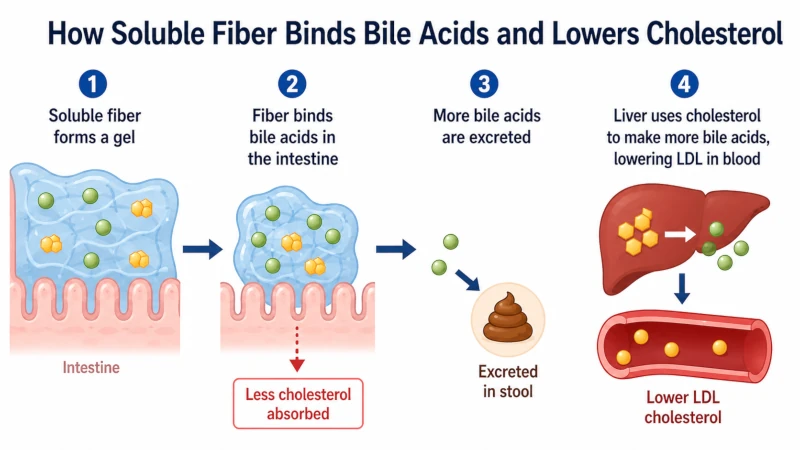
Cutting cholesterol off at the gut. Viscous, soluble fiber — the kind in oats, barley, and apple flesh — thickens the contents of your intestine and binds bile acids, so less cholesterol gets reabsorbed into the blood. The second mechanism is changing the fats you eat. Replacing saturated fat (butter, fatty meat, cream) with unsaturated plant oils lowers the cholesterol your body circulates. On top of those, several plants gently relax blood vessels, which lowers blood pressure — and high blood pressure is one of the main forces that injures artery walls over time.
None of this is dramatic per ingredient. Stack the effects over years, though, and they matter.
The herbs and plant foods with the best evidence
Evidence at a glance
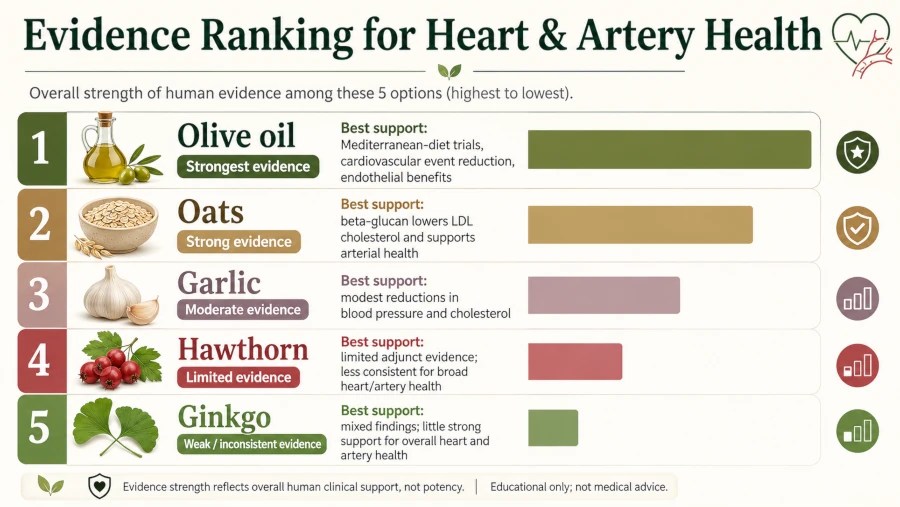
| Herb / food | What it may do | Evidence |
| Garlic | Lowers blood pressure (~5 mm Hg systolic); one trial slowed plaque progression | Strong (BP); limited (plaque) |
| Oats / soluble fiber | Lowers LDL cholesterol at ≥3 g/day beta-glucan | Strong |
| Olive oil (EVOO) + Mediterranean diet | Fewer major cardiovascular events as a dietary pattern | Strong (as a diet) |
| Hawthorn | Eases symptoms in mild heart failure (adjunct) — not plaque | Moderate, narrow |
| Ginkgo | Marketed for circulation; little real benefit for arteries | Weak / mixed |
Garlic — the strongest case
If you take one thing from this article, make it garlic. It has the most consistent human evidence of anything on the old list.
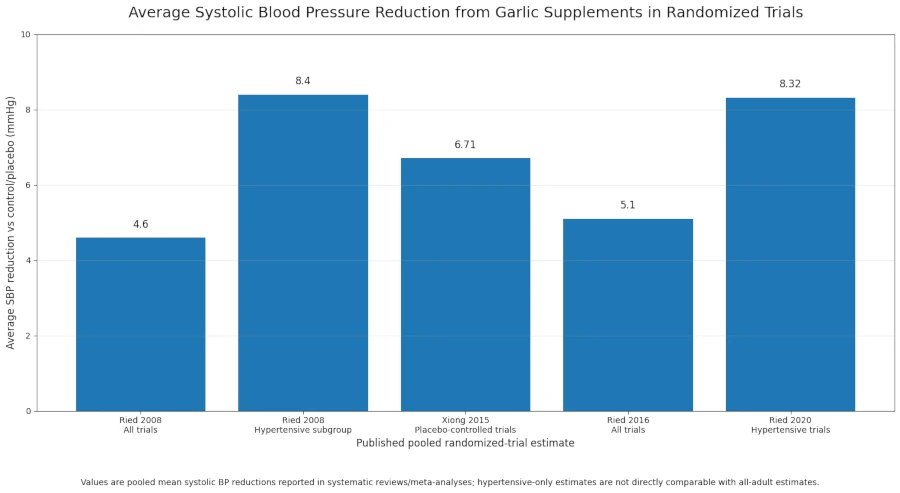
For blood pressure, multiple meta-analyses of randomized trials agree: garlic supplements lower systolic pressure by roughly 5 mm Hg and diastolic by 2–3 mm Hg on average, with the biggest drops in people who actually have high blood pressure to begin with [Ried, 2016]. That’s in the range of a starting dose of some prescription medications — modest, but real.
The artery evidence is thinner but interesting. In one four-year randomized trial, dehydrated garlic (about 900 mg/day) slowed the progression of plaque measured by ultrasound, compared with placebo [Linus Pauling Institute]. Slowed progression — not reversal. Smaller studies pairing aged garlic extract with CoQ10 point the same direction. Promising, not proven.
What to expect and watch for: Cooking with garlic is free of downside. As a supplement, about a third of people get mild burping, gas, or reflux, especially in the first few weeks; a smaller share (roughly 4–6%) get more noticeable stomach upset [Ried, 2016]. Garlic can also thin the blood slightly, which matters if you take an anticoagulant or are heading into surgery — more on that below.
Oats and soluble fiber — the cholesterol workhorse
Plain, unglamorous oats have something most herbs on this list don’t: an effect solid enough that the U.S. FDA permits a heart-health claim for them.
The active ingredient is beta-glucan, a viscous soluble fiber. Pooled trial data show that at least 3 grams a day lowers LDL (“bad”) cholesterol by about 0.2–0.25 mmol/L (roughly 8–10 mg/dL), without dropping your protective HDL [Whitehead, 2014]; [Ho, 2016]. The effect is larger if your cholesterol starts high. Apple flesh, barley, beans, and psyllium work through the same mechanism.
Three grams of beta-glucan is roughly what’s in a generous bowl of oatmeal (about 60–80 g of dry oats). This is the most reliable “herbal” intervention you can make, and it’s a breakfast.
Olive oil and a Mediterranean pattern
The olive tree earns its old reputation, but the evidence is really about a whole way of eating, not a spoonful of oil as medicine.
In the PREDIMED trial — a large randomized study in older Spanish adults at high cardiovascular risk — a Mediterranean diet topped up with extra-virgin olive oil or nuts led to fewer major cardiovascular events (heart attack, stroke, cardiovascular death) than a lower-fat control diet [Estruch, 2018]. Within that study, people eating the most extra-virgin olive oil had notably lower cardiovascular risk [Guasch-Ferré, 2014]. (For transparency: the original 2013 paper was retracted over a randomization flaw and republished in 2018 with the same overall conclusion.)
The practical takeaway is simple: extra-virgin olive oil as your main fat, lots of vegetables, legumes, nuts, fish, and whole grains, and little processed and red meat. That pattern does more for your arteries than any single herb.
Hawthorn — for the heart muscle, not the plaque
Hawthorn is a traditional heart remedy with a specific, real, and narrow evidence base. A Cochrane review of 14 double-blind trials found that hawthorn leaf-and-flower extract, used alongside conventional treatment, improved symptoms (shortness of breath, fatigue) and exercise tolerance in people with mild chronic heart failure [Cochrane, 2008]. Reported side effects were infrequent and mild — occasional nausea or dizziness.
Two honest caveats. First, this is about heart-failure symptoms, not cleaning arteries or preventing heart attacks. Second, because hawthorn acts on the heart, it can interact with heart medications such as digoxin, so it’s not a casual self-prescribed add-on. If you have a heart condition, this is a conversation for your cardiologist, not a supplement-aisle decision.
Ginkgo — popular, but the evidence is thin
Ginkgo biloba is sold heavily for circulation, so it’s worth being clear. Older analyses suggested it might help leg pain from poor circulation (intermittent claudication), but a more rigorous Cochrane review of 11 trials found no clinically meaningful benefit, and noted the early positive results were likely inflated by missing negative studies [Cochrane, 2013]. Ginkgo also has a blood-thinning effect and a real interaction risk with anticoagulants.
For artery and circulation health specifically, ginkgo isn’t where your effort or money is best spent.
A quick word on evening primrose, onion, and artichoke
These show up on nearly every “artery” list, with weaker support. Evening primrose oil is rich in polyunsaturated fat, and swapping unsaturated for saturated fat is good for cholesterol — but the oil itself isn’t a proven heart treatment. Onion shares some of garlic’s family chemistry and is a fine thing to eat often. Artichoke leaf extract has some small cholesterol studies behind it, though the quality is mixed. Reasonable to enjoy as foods; don’t expect them to do heavy lifting on their own.
Herbs to be cautious with — or skip
Some plants that appear on traditional “artery” and “blood pressure” lists are genuinely risky for self-treatment, and it’s worth saying so plainly.
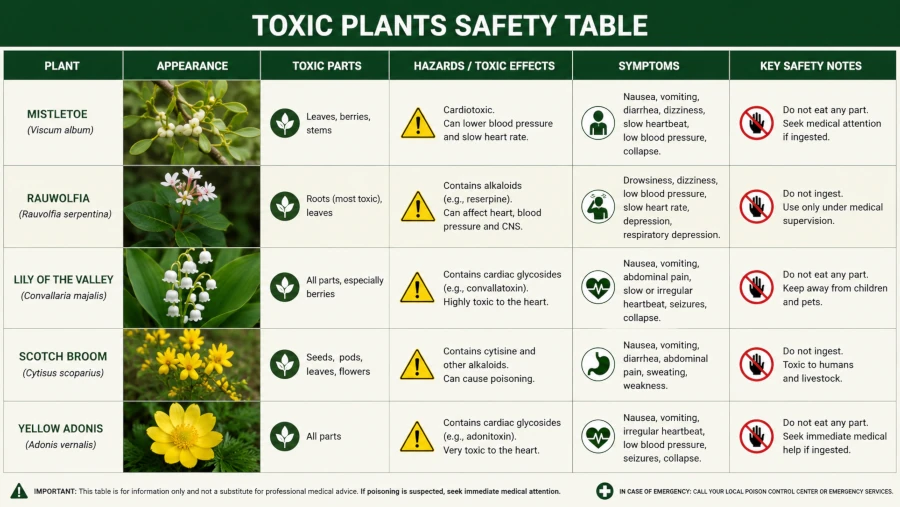
Mistletoe is often listed for blood pressure, and the old version of this page repeated that. Its berries are poisonous, and the plant can have toxic effects — this is not a tea to experiment with at home. Rauwolfia contains reserpine, which is an actual prescription blood-pressure drug with serious potential side effects including depression; it shouldn’t be used as a casual herb. Lily of the valley, scotch broom, and yellow adonis contain cardiac glycosides — heart-affecting compounds with a narrow margin between a dose that acts and a dose that harms. Leave these to clinicians.
The general rule: a plant powerful enough to change your heart rhythm or blood pressure is powerful enough to hurt you if you guess at the dose.
What actually moves the needle on artery health
If you want the things with the strongest evidence for protecting your arteries, herbs are a supporting act. The headliners are familiar, and they work:
- Don’t smoke (or stop) — the single biggest modifiable factor for artery damage.
- Eat the Mediterranean-style pattern described above, built on plants, fish, and olive oil.
- Move most days — even brisk walking improves blood pressure, cholesterol, and blood sugar.
- Know and manage your numbers — blood pressure, LDL cholesterol, and blood glucose. A simple cholesterol test tells you where you stand.
- Take prescribed medication when it’s indicated. Statins and blood-pressure drugs are not the enemy of “natural” health; for higher-risk people they prevent heart attacks and strokes in ways no herb can.
Use herbs and heart-friendly foods to complement that foundation, not to replace it.
Safety, interactions, and who should be careful
A few rules keep “natural” from turning into “harmful.”
Bleeding and blood thinners. Garlic, ginkgo, and high-dose fish oil can all increase bleeding tendency. If you take warfarin, a DOAC, or even daily aspirin, talk to your doctor or pharmacist before adding these — and stop blood-thinning supplements well before any surgery or dental procedure.
Heart medications. Hawthorn and other heart-active plants can amplify or interfere with drugs like digoxin and blood-pressure medications. Don’t stack them blindly.
Pregnancy and breastfeeding. Many medicinal herbs haven’t been shown safe in pregnancy or nursing. As a default, avoid herbal supplements during these times unless your clinician approves a specific one. Culinary amounts of garlic, onion, and oats in food are fine.
Quality varies. Supplements aren’t regulated as strictly as medicines, so potency and purity differ between brands and even bottles. Look for third-party testing (USP, NSF) where you can.
When to loop in a professional. Before starting any supplement if you have heart, kidney, or liver disease, take prescription drugs, are pregnant or nursing, or are managing a diagnosed condition. A pharmacist is an underused, free resource for interaction checks.
Warning signs you should never wait on
No herb belongs anywhere near a cardiovascular emergency. Learn these signs and act on them.
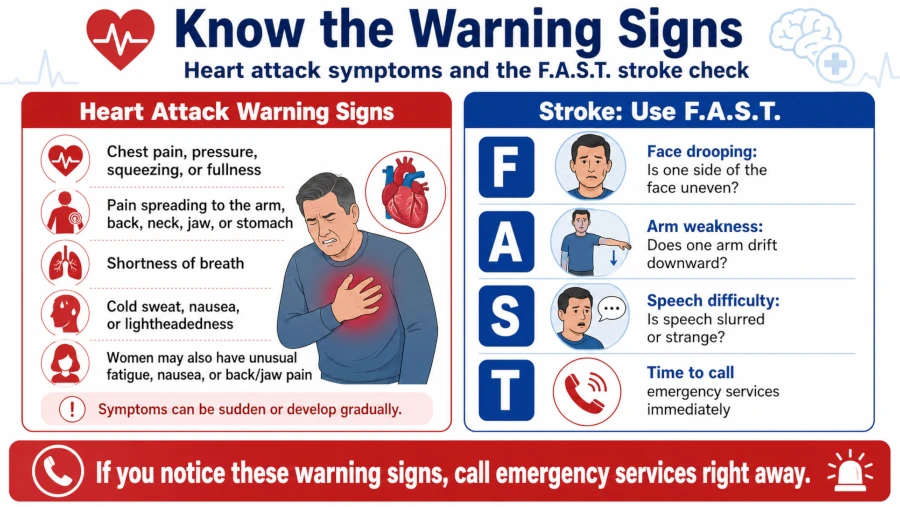
Heart attack — call 911 for chest discomfort, pressure, squeezing, or fullness in the center of the chest that lasts more than a few minutes or comes and goes; discomfort spreading to the arm, jaw, neck, or back; shortness of breath; or a cold sweat, nausea, or lightheadedness [American Heart Association]. Women more often have symptoms other than chest pain, such as unusual fatigue, nausea, or back or jaw pain.
Stroke — remember F.A.S.T.: Face drooping, Arm weakness, Speech difficulty, Time to call 911 [American Stroke Association]. Call even if the symptoms ease — a brief “mini-stroke” (TIA) is a serious warning.
In both cases, call emergency services rather than driving yourself. Treatment is time-sensitive, and minutes change outcomes.
| Health Disclaimer: This article is for general education and is not medical advice, diagnosis, or treatment. Herbs and supplements can have real effects and real interactions, and what’s right for one person can be wrong for another. Don’t start, stop, or change any supplement or medication based on this page alone. If you are pregnant or nursing, have a medical condition, or take prescription drugs, talk with a qualified healthcare professional before using any herbal or natural remedy. If you think you may be having a heart attack or stroke, call your local emergency number immediately. |
Frequently Asked Questions
Do any herbs actually remove plaque from arteries?
No. No herb, supplement, or food has been shown to dissolve or remove existing arterial plaque. Even prescription drugs only shrink plaque slowly and partially. What the best-studied herbs do is lower the risk factors — cholesterol, blood pressure, inflammation — that cause plaque to build in the first place.
Which herb has the strongest evidence for heart and artery health?
Garlic. Randomized-trial meta-analyses show it lowers blood pressure by roughly 5 mm Hg systolic, with the largest effect in people with hypertension, and one four-year trial showed it slowed plaque progression. Oats (for cholesterol) and an olive-oil-based Mediterranean diet (for overall cardiovascular events) also have strong support.
Can I take these herbs instead of my cholesterol or blood pressure medication?
No — and don’t stop prescribed medication on your own. Herbs can complement treatment, but for people at higher risk, statins and blood-pressure drugs prevent heart attacks and strokes in ways herbs can’t match. Discuss any changes with your prescriber.
Are artery-health herbs safe with blood thinners?
Often not without supervision. Garlic, ginkgo, and high-dose fish oil can increase bleeding risk and interact with warfarin, DOACs, and aspirin. Talk to your doctor or pharmacist first, and stop them before surgery.
Is it safe to use these herbs during pregnancy?
Treat medicinal herbal supplements as off-limits in pregnancy and breastfeeding unless your clinician approves a specific one. Normal food amounts of garlic, onion, and oats are fine.
How long before herbs or diet changes affect my arteries?
Cholesterol and blood pressure can shift within weeks of consistent dietary change. Any effect on the artery wall itself is slow — think months to years — which is exactly why these are long-game habits, not quick fixes.
References
- Linus Pauling Institute, Oregon State University. Atherosclerosis (Micronutrient Information Center). View source
- Ried K. Garlic Lowers Blood Pressure in Hypertensive Individuals, Regulates Serum Cholesterol, and Stimulates Immunity: An Updated Meta-analysis and Review. Journal of Nutrition, 2016. View source
- Whitehead A, et al. Cholesterol-lowering effects of oat β-glucan: a meta-analysis of randomized controlled trials. American Journal of Clinical Nutrition, 2014. View source
- Ho HVT, et al. The effect of oat β-glucan on LDL-cholesterol, non-HDL-cholesterol and apoB for CVD risk reduction. British Journal of Nutrition, 2016. View source
- Estruch R, et al. Primary Prevention of Cardiovascular Disease with a Mediterranean Diet Supplemented with Extra-Virgin Olive Oil or Nuts (PREDIMED). New England Journal of Medicine, 2018. View source
- Guasch-Ferré M, et al. Olive oil intake and risk of cardiovascular disease and mortality in the PREDIMED Study. BMC Medicine, 2014. View source
- Pittler MH, Guo R, Ernst E. Hawthorn extract for treating chronic heart failure. Cochrane Database of Systematic Reviews, 2008. View source
- Nicolaï SP, et al. Ginkgo biloba for intermittent claudication. Cochrane Database of Systematic Reviews, 2013. View source
- Mechanistic insights into the regression of atherosclerotic plaques. Frontiers / NCBI, 2024. View source
- American Heart Association. Warning Signs of a Heart Attack. View source
- American Stroke Association. Stroke Symptoms (F.A.S.T.). View source
